26 May 2026
Adaptive Quests: Machine Learning Models That Tailor Role-Playing Game Structures to Player Decision Patterns
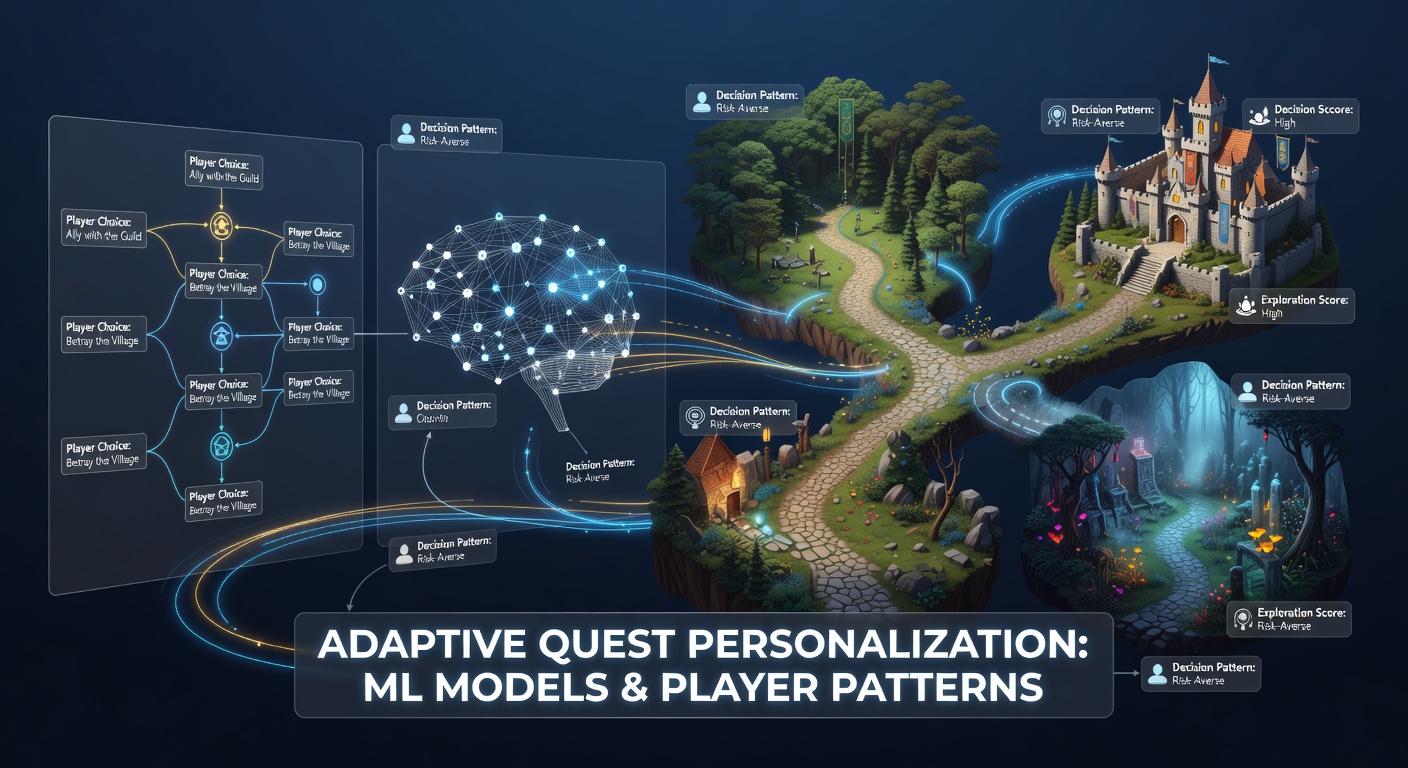
Developers integrate machine learning models into role-playing games to analyze sequences of player choices and adjust quest structures accordingly, creating branches that reflect patterns such as aggressive combat preferences or dialogue-heavy exploration routes. These systems process data from in-game actions including dialogue selections, item usage, and pathfinding decisions to generate dynamic objectives that evolve during a single playthrough.
Core Mechanisms Behind Decision Pattern Analysis
Reinforcement learning algorithms track cumulative player behaviors across multiple sessions and assign weights to recurring patterns, such as repeated stealth approaches that trigger non-combat resolution paths in subsequent quests. Supervised learning models trained on anonymized datasets from thousands of players identify clusters of similar decision profiles, allowing the game engine to predict likely future actions and pre-load compatible quest variants. Data from sources like the Entertainment Software Association shows that role-playing titles incorporating these techniques maintain session lengths that extend by measurable margins compared to static quest designs.
Decision trees form the backbone of many implementations, where each node represents a choice point and branches represent outcomes that feed back into the model for refinement. Neural networks process high-dimensional inputs from player telemetry, including time spent on sub-objectives and emotional response indicators derived from controller inputs, to refine personalization without requiring explicit player input. Observers note that such systems operate in real time, updating quest parameters mid-session based on the latest sequence of decisions.
Examples of Model Deployment in Existing Titles
One prominent case involves open-world RPGs where a model detects a player's tendency toward alliance-building choices and generates side quests that expand diplomatic storylines rather than combat encounters. Another implementation uses clustering algorithms to group players by exploration speed, then adjusts quest pacing so that fast-moving players receive time-sensitive objectives while slower explorers receive layered investigation tasks. Researchers at institutions across the European Union have documented these adaptations in conference proceedings from events held through spring 2026, confirming measurable increases in quest completion variety.
Technical Integration and Data Flow
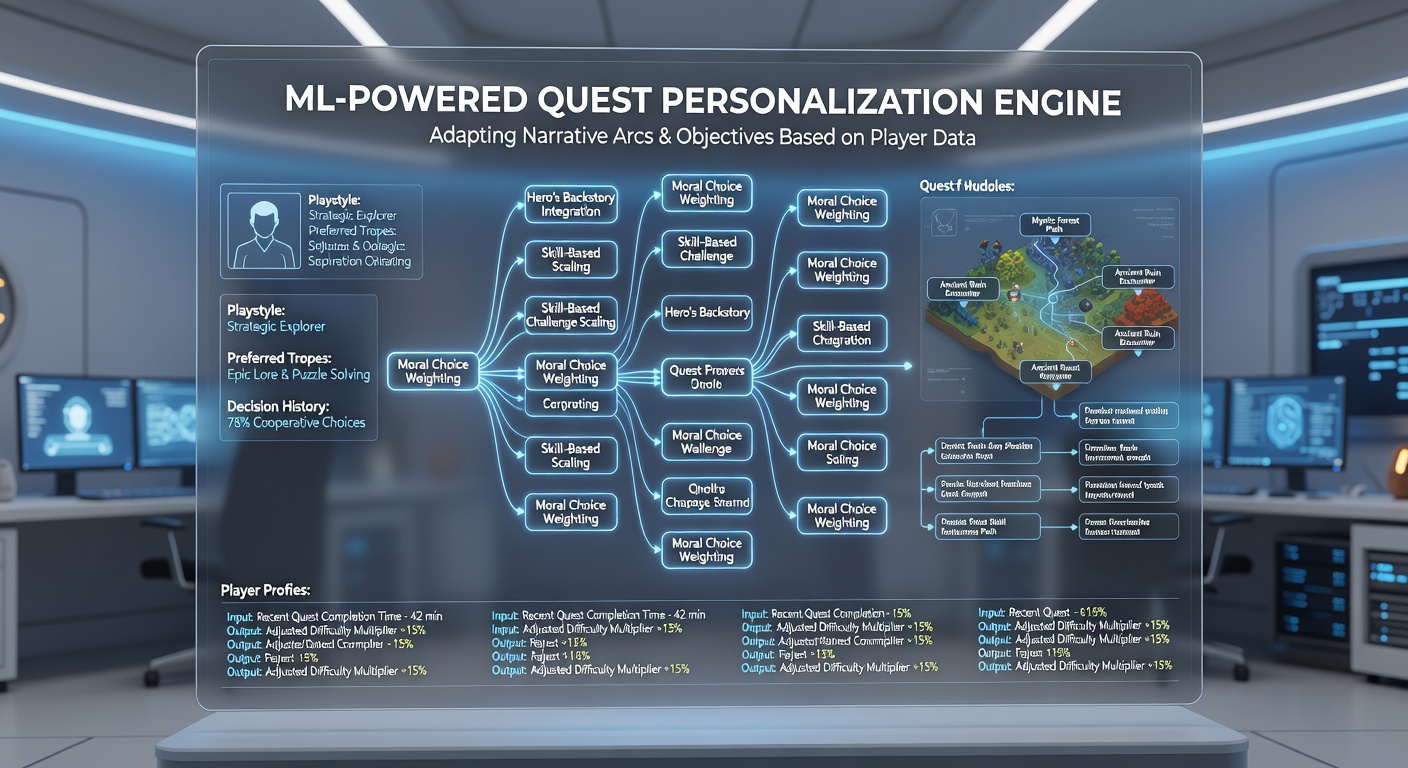
Telemetry pipelines collect raw decision data at regular intervals and feed it into cloud-based or on-device models that output updated quest parameters within seconds. Game engines such as Unity and Unreal incorporate plugin architectures that allow these models to interface directly with narrative scripting tools, enabling quest givers to alter dialogue trees or objective markers on the fly. The process maintains consistency by anchoring changes to the core story arc while varying the methods players use to advance that arc.
By May 2026, several mid-sized studios had adopted hybrid models combining offline training on large historical datasets with online fine-tuning during active play sessions. This approach reduces latency while preserving the ability to respond to novel decision sequences that deviate from training data. Industry reports indicate that such integrations require careful calibration of privacy controls to handle player data responsibly across different regulatory jurisdictions.
Challenges in Scaling Personalization Models
Model accuracy depends on sufficient training data volume, which smaller development teams address through transfer learning from publicly available RPG datasets. Edge cases arise when players exhibit inconsistent patterns, prompting fallback mechanisms that revert to default quest structures to avoid narrative contradictions. Performance overhead remains a consideration, particularly on mobile platforms where inference must compete with rendering demands.
Studies conducted by Canadian research consortia have examined bias mitigation techniques that prevent models from overgeneralizing based on early-game choices, ensuring later decisions retain equal influence on quest evolution. These efforts involve periodic retraining cycles that incorporate fresh player cohorts to maintain relevance as game populations shift.
Conclusion
Machine learning models continue to expand the range of personalized quest experiences available in role-playing games by systematically mapping individual decision patterns to adaptive narrative structures. As data collection methods and algorithm efficiency improve, these systems deliver branching content that aligns more closely with observed player behavior across extended play sessions. The documented implementations through 2026 demonstrate consistent technical progress in real-time adaptation while preserving core gameplay integrity.