19 Jun 2026
Biometric Sensors Reshaping AI Behaviors in Narrative Horror Releases
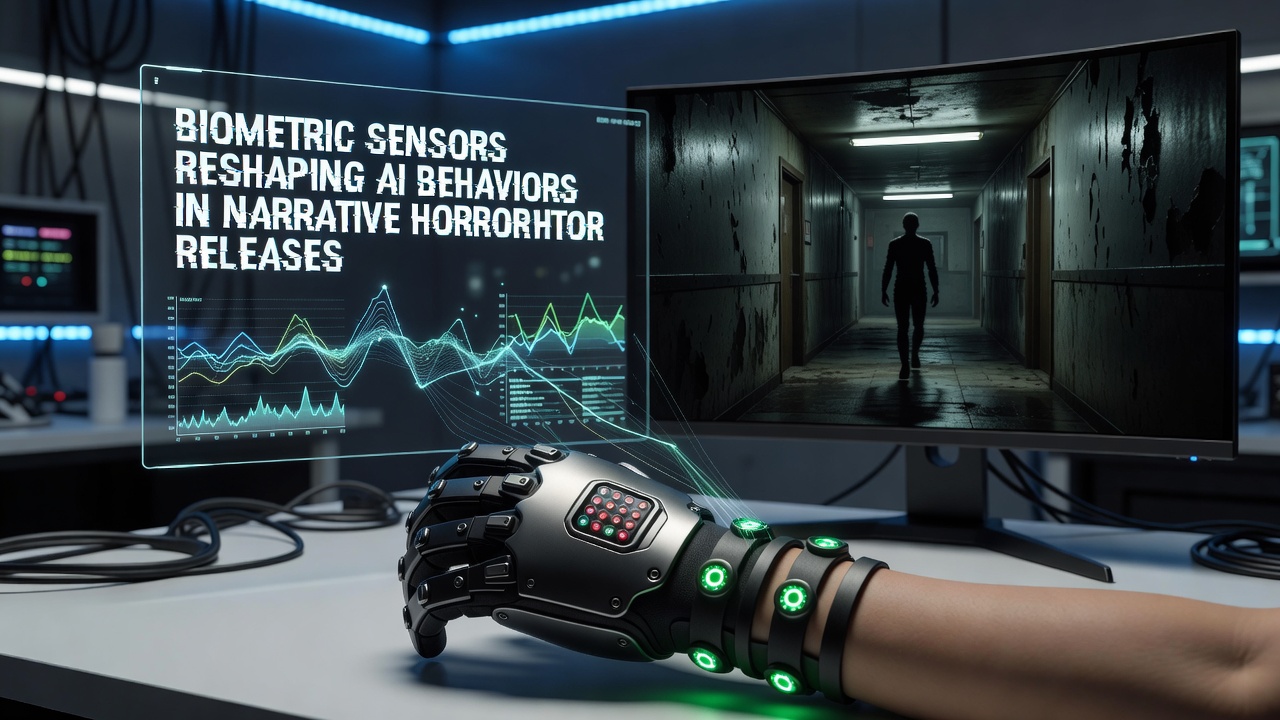
Biometric sensors have entered narrative horror game development as tools that supply real-time physiological data to artificial intelligence systems, and developers now use heart rate monitors, galvanic skin response units, and eye-tracking hardware to adjust enemy patterns, tension pacing, and branching story events. Research from the Entertainment Software Association shows adoption rates for physiological input devices rose steadily between 2023 and 2025, while several studios announced integrations scheduled for release windows in June 2026. These systems read player arousal levels during key sequences and feed that information into behavior trees so AI-controlled characters can escalate or de-escalate threats without relying solely on scripted difficulty curves.
Core Sensor Types and Data Streams
Modern implementations combine multiple inputs into unified data pipelines. Heart-rate variability captured through wristbands or ear-clip sensors provides a continuous measure of sympathetic nervous system activation, while skin conductance electrodes detect sudden spikes associated with startle responses. Eye-tracking cameras mounted in headsets record fixation duration and pupil dilation, which researchers at the Australian Institute for Interactive Entertainment correlate with sustained fear states. When these streams merge through sensor-fusion algorithms, the resulting dataset reaches the game engine every 200 milliseconds and triggers parameter changes inside AI decision modules. Observers note that latency under 300 milliseconds keeps adjustments imperceptible to players yet fast enough to alter chase sequences or environmental hazards mid-encounter.
AI Behavior Modification Techniques
Narrative horror titles employ several distinct modification layers once biometric values cross defined thresholds. One layer scales enemy patrol speeds and audio cue volumes when heart rate exceeds a baseline by 25 percent, while another layer swaps dialogue branches or inserts additional tension beats when skin conductance readings remain elevated for more than 40 seconds. A third layer uses gaze heat maps to reposition hidden threats toward areas players have overlooked, creating dynamic misdirection that scripted events cannot replicate. Data from a 2025 University of Tokyo laboratory study indicated that players exposed to these adaptive systems completed narrative arcs with measurably higher average engagement times compared with control groups using static AI routines. The same study recorded a 17 percent increase in reported immersion scores when biometric feedback loops remained active throughout play sessions.
Integration Challenges and Standards
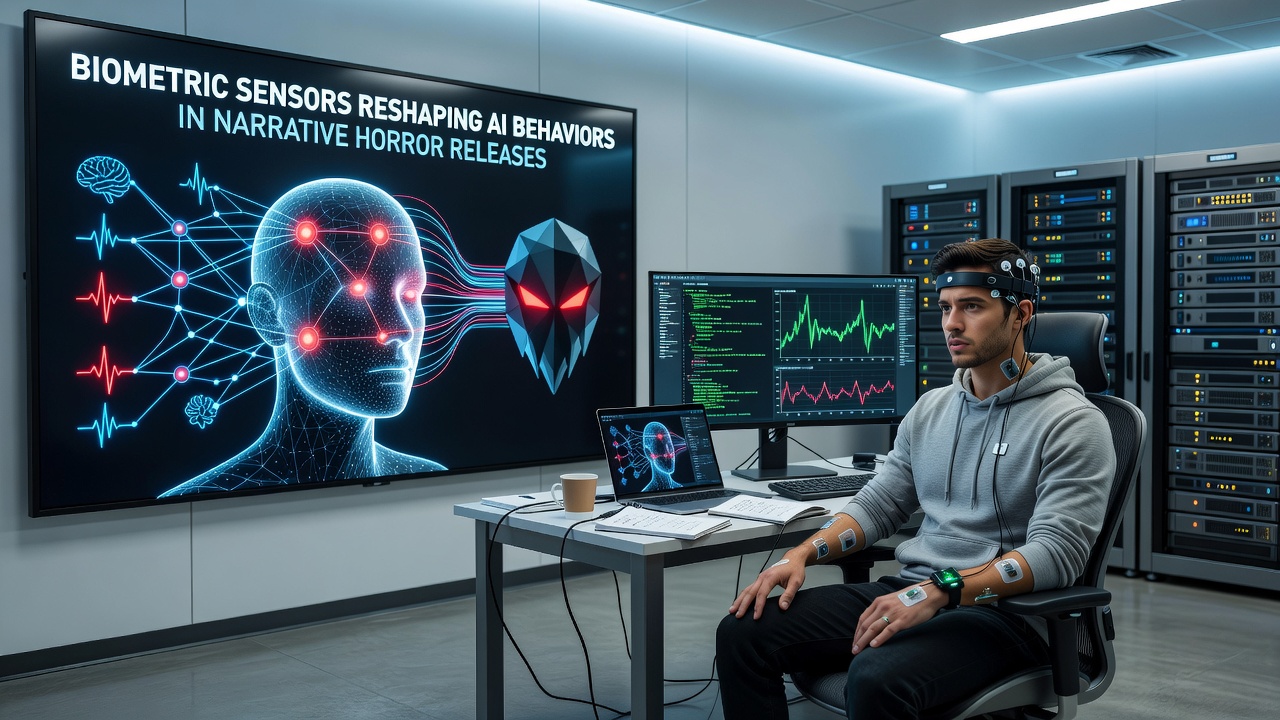
Hardware compatibility remains an ongoing focus for studios and middleware providers. Developers must accommodate both high-end VR headsets with built-in trackers and lower-cost wearable bands that connect via Bluetooth, so calibration routines now standardize baseline readings at the start of each session. Privacy frameworks established by the European Data Protection Board require explicit consent screens and on-device processing for raw physiological signals, which prevents transmission of identifiable health metrics to external servers. Engineers at several Canadian research consortia have published open-source calibration libraries that reduce setup time from four minutes to under ninety seconds while maintaining accuracy within two beats per minute for heart-rate data. These libraries also support fallback modes that disable biometric input if sensor contact drops below acceptable thresholds, ensuring gameplay continues without interruption.
Case Implementations in 2026 Releases
Multiple narrative horror projects slated for June 2026 have disclosed biometric integration roadmaps. One title uses combined heart-rate and gaze data to modulate the frequency of auditory hallucinations experienced by the protagonist, while another adjusts the speed at which environmental corruption spreads based on sustained skin conductance levels. Technical breakdowns released by participating studios reveal that behavior-tree nodes now include conditional branches keyed to rolling averages rather than instantaneous spikes, which prevents erratic AI reactions to single momentary jumps in arousal. Figures released by middleware vendor Unity Technologies indicate that more than 40 percent of new horror-genre projects in their 2026 showcase pipeline include at least one biometric input channel during internal testing phases.
Conclusion
Biometric sensor data continues to supply narrative horror releases with measurable inputs that reshape AI decision-making at runtime, and ongoing standardization efforts plus privacy-compliant pipelines support wider deployment across platforms. As hardware costs decline and calibration routines improve, additional titles scheduled beyond June 2026 are expected to incorporate similar systems while maintaining compatibility with existing regulatory requirements.