26 Jul 2026
Buffer Management Strategies in Graphics APIs Reducing Stutter During Cross-Generation Hardware Transitions for Established Game Franchises
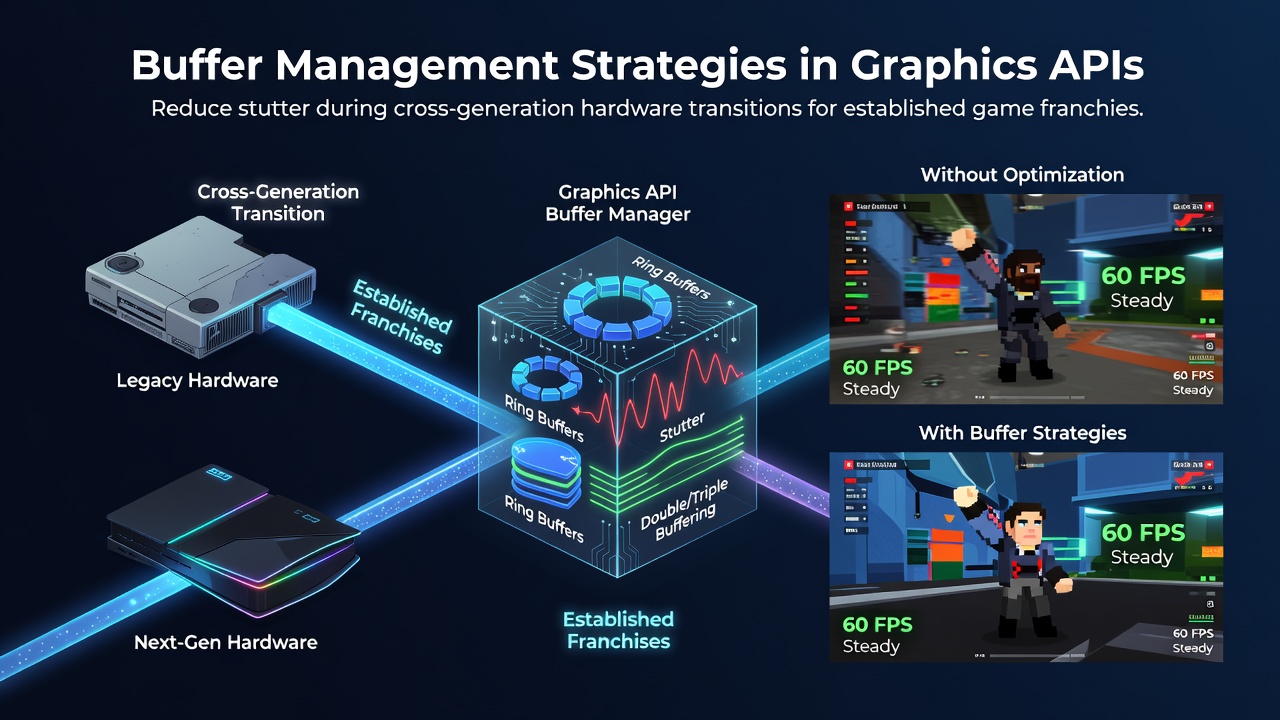
Established game franchises often face stutter when players upgrade hardware or move titles between console generations, and buffer management strategies within graphics APIs address these interruptions by optimizing memory allocation and data transfer. Developers working on long-running series like open-world action adventures apply these techniques to maintain frame consistency as new GPUs and consoles introduce different memory architectures and bandwidth capabilities. Research from graphics engineering teams shows that effective buffer handling reduces hitches caused by resource uploads and synchronization delays during transitions that occur in mid-2026 hardware cycles.
Core Concepts of Buffer Management in Modern APIs
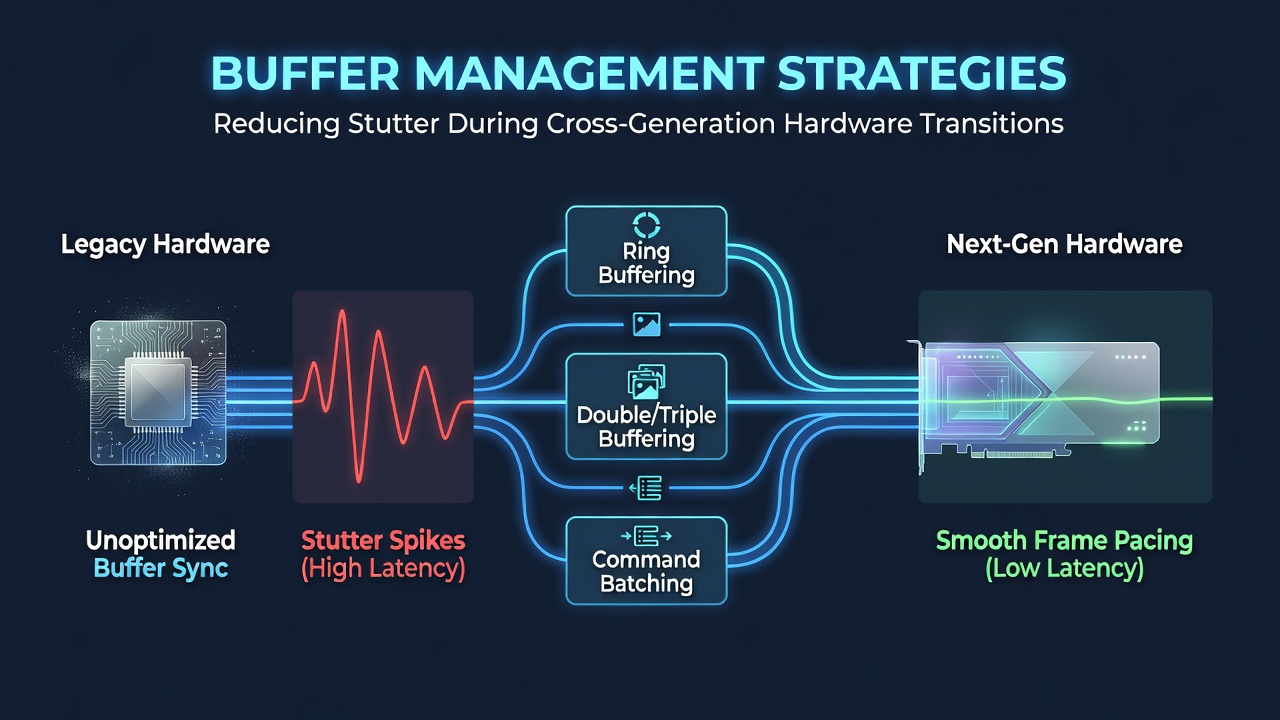
Graphics APIs such as Vulkan, DirectX 12, and Metal provide explicit control over buffer creation, mapping, and residency, which allows engines to pre-allocate staging areas and persistent resources before gameplay begins. When a franchise title moves from one hardware platform to another, these controls prevent repeated allocations that trigger frame drops. Data from developer conferences indicates that using persistent mapped buffers combined with ring buffers cuts upload latency by managing command queue submissions more efficiently across varying memory pools. Engineers coordinate buffer lifetimes with frame pacing algorithms so that cross-generation saves and asset streams load without interrupting the render loop.
Challenges During Hardware Generation Shifts
Cross-generation transitions introduce mismatches in buffer alignment requirements, cache coherency rules, and maximum allocation sizes that older code paths cannot handle automatically. Franchises with large asset libraries, including character models and environment textures, encounter spikes when the API must resize or migrate buffers to match new hardware limits. Reports compiled by industry groups in July 2026 highlight that stutter events cluster around streaming events in open areas where multiple buffer updates coincide with shader recompilation on the target device. Teams mitigate this by implementing versioned buffer layouts that adapt at runtime based on detected hardware capabilities rather than relying on static configurations carried over from previous generations.
Practical Strategies Employed by Development Teams
One approach involves double or triple buffering with explicit fencing to separate CPU writes from GPU reads, which keeps the pipeline moving even when hardware bandwidth changes. Another technique uses sub-allocation within larger device-local buffers to reduce fragmentation that appears when titles scale from last-generation consoles to current models. Observers note that command buffer recording becomes more predictable once developers batch buffer updates and reuse descriptor sets across frames. Studies conducted at technical universities in Canada demonstrate measurable reductions in frame time variance when these patterns replace immediate-mode resource creation in legacy codebases.
Additional methods focus on asynchronous compute queues that handle buffer copies while the graphics queue renders, preventing main-thread stalls during asset streaming. Game engines integrate these queues with job systems that prioritize critical buffer residency checks before a new area loads. Data collected from performance telemetry in July 2026 shows consistent improvements for titles that migrated to these patterns ahead of new console launches.
Application in Established Franchises
Long-running series benefit because their core engines already contain mature streaming systems that integrate updated buffer strategies without full rewrites. When a franchise releases a new installment on upgraded hardware, teams apply buffer residency hints and residency maps to preload only the data needed for the current viewpoint. This targeted approach limits memory pressure and avoids the stutter that occurs when entire levels attempt simultaneous uploads. External documentation from the Khronos Group outlines recommended patterns for multi-queue buffer synchronization that several studios have adopted for their cross-platform releases.
Telemetry gathered from player sessions reveals fewer hitches in areas where buffer compaction routines run during loading screens rather than mid-play. Franchises that maintain separate buffer pools for static geometry versus dynamic effects achieve smoother transitions because the API can evict unused regions without affecting active draw calls. European research institutions tracking console port performance have recorded similar patterns across multiple titles that share the same underlying engine technology.
Outlook for Ongoing Hardware Cycles
As hardware evolves through 2026 and beyond, buffer management remains a focal point for maintaining visual fidelity without introducing interruptions. Teams continue refining residency policies and exploring unified memory models that further reduce explicit copies between host and device. Continued monitoring of frame delivery metrics helps identify remaining edge cases where buffer strategy adjustments deliver additional stability for established game series moving across platforms.
Conclusion
Buffer management strategies within contemporary graphics APIs provide concrete mechanisms that limit stutter during hardware transitions for major game franchises. By coordinating allocation, synchronization, and streaming at the API level, development teams sustain consistent performance as new devices enter the market. Ongoing refinements in these areas support smoother player experiences across successive hardware generations.