Endless Frontiers: Procedural Worlds Stretch Indie Game Legs into Infinity
21 Apr 2026
Endless Frontiers: Procedural Worlds Stretch Indie Game Legs into Infinity
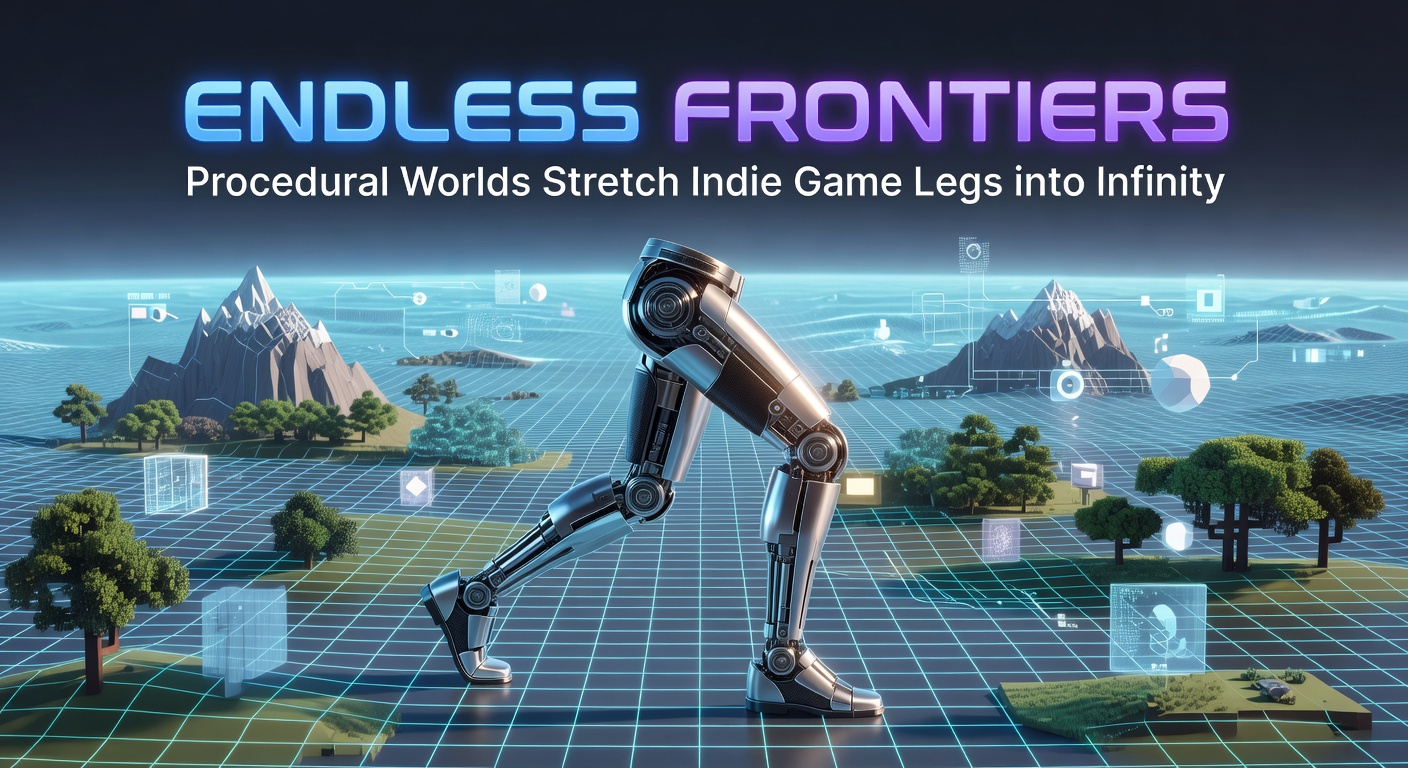
The Mechanics of Procedural Magic in Indie Games
Procedural generation crafts entire game worlds algorithmically from seeds and rules rather than hand-built assets, enabling indie developers to deliver vast, replayable experiences without massive budgets or teams; this approach, rooted in mathematics and code, generates terrains, structures, quests, even narratives on the fly, so players encounter fresh content every session. Data from the International Game Developers Association reveals that over 60% of indie studios now incorporate some form of procedural tech, up sharply from a decade ago, because it stretches limited resources into seemingly endless frontiers.
Take early adopters who turned constraints into strengths; developers at that time faced hardware limits, yet algorithms like noise functions created depth from simplicity, proving small teams could rival AAA scopes. Now, with tools more accessible via engines like Unity and Godot, indies push boundaries further, blending procedural elements with curated touches for hybrid worlds that feel alive and infinite.
From Rogue's Dungeons to Modern Infinities
Rogue, released in 1980, kicked off the procedural revolution with randomly generated levels that kept roguelikes fresh across playthroughs, inspiring a lineage where indies leaned on code to multiply content; Terraria followed suit years later, spawning biomes, caves, and bosses procedurally, so one world's hellish depths differ wildly from another's sky islands. Starbound expanded this to space, populating planets with unique flora, fauna, and dungeons via layered algorithms, while No Man's Sky, though not purely indie by launch, showed procedural scale's potential, generating sextillions of planets from compact data.
But here's the thing: indies like these don't just copy formulas; they innovate, as seen in Valheim's Viking realms where procedural heights, forests, and seas emerge from noise maps tweaked for Norse lore, keeping co-op sessions endlessly varied. Observers note how such games hook players longer—figures from Steam data indicate procedural titles average 20% more playtime than static ones—because variety combats repetition, turning solo devs into world-builders overnight.
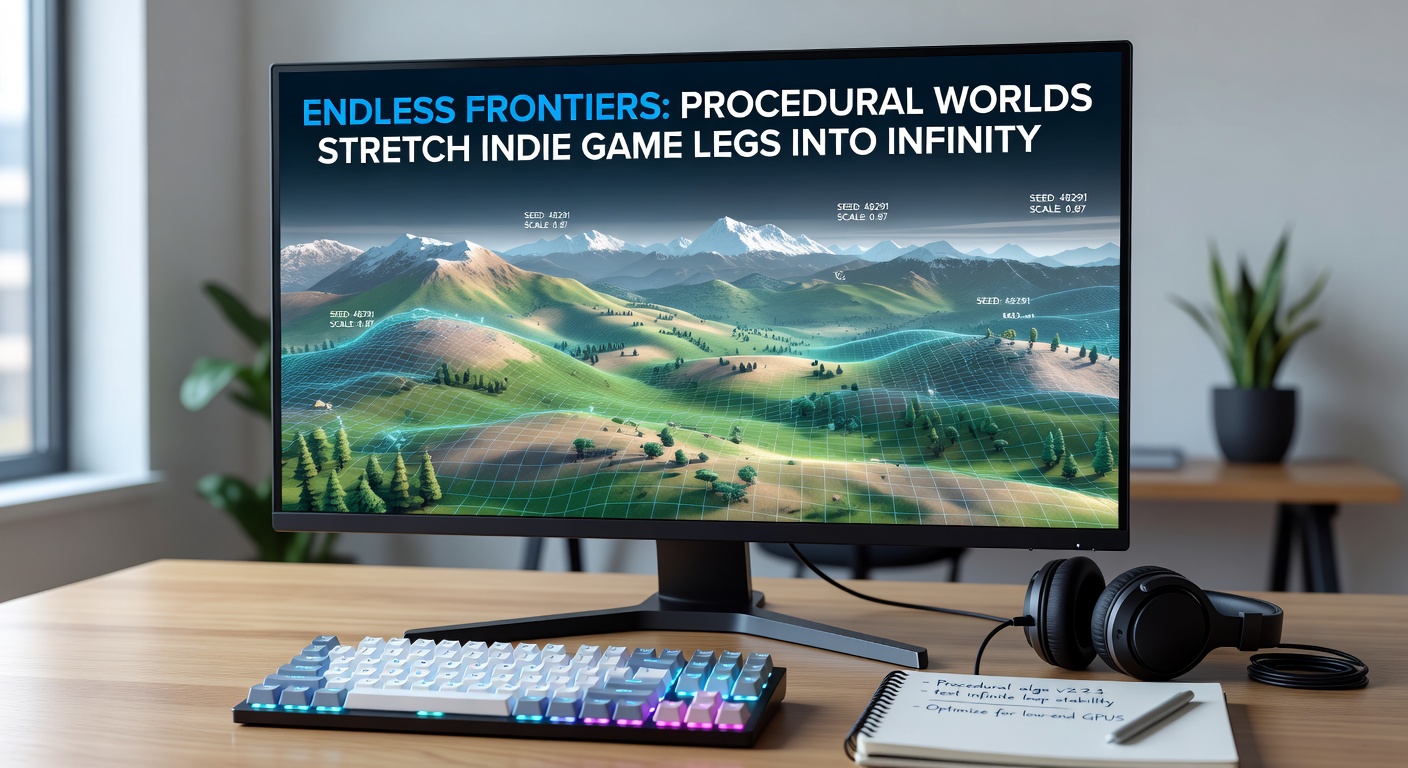
Algorithms at the Core: Noise, Waves, and Beyond
Perlin noise forms the backbone, simulating natural patterns like rolling hills or turbulent oceans through layered gradients; developers stack these with Voronoi diagrams for biomes or cellular automata for erosion effects, creating realistic landscapes that evolve in real-time. Wave Function Collapse takes it further, tiling pre-made pieces probabilistically—like assembling a puzzle where rules dictate fits—so villages or caves feel handcrafted yet infinite.
What's interesting is how indies mix these; one studio might seed L-systems for branching trees and rivers, then overlay Marching Cubes for smooth voxel terrains, resulting in worlds where caves twist uniquely under every mountain. Research from the Australian International Games Association highlights performance gains, showing procedural methods cut asset storage by up to 90%, freeing indies from bloated file sizes that plague big-budget games.
And yet, smart procedural design avoids chaos; constraints like heightmaps prevent floating islands unless intended, while biome transitions use splines for seamless blends, ensuring players roam without jarring pops or glitches.
Indie Standouts: Worlds That Redefine Scale
Deep Rock Galactic drills procedurally into asteroids teeming with caves, enemies, and loot, where each mission's layout shifts via mission-specific seeds, keeping four-player co-op chaotic and addictive; teh team at Ghost Ship Games credits this for millions of hours logged, as data shows missions replayed 15 times on average. Cobalt Core, a roguelike deckbuilder, procedurally weaves spaceship battles and events, blending card synergies with branching narratives that unfold differently per run.
Then there's Dinkum, an Australian indie channeling Animal Crossing vibes into outback frontiers, where towns, farms, and wildlife sprout procedurally across islands; players who've sunk hundreds of hours report the joy of rediscovery, stumbling on hidden oases or rare animal packs mid-exploration. Studies from university researchers at the University of Melbourne found such games boost creativity, with procedural freedom encouraging emergent stories like unlikely player-built mega-bases amid ever-shifting sands.
So, these titles prove indies aren't just surviving on procedural crutches; they're thriving, turning code into canvases bigger than any artist's dream.
Hurdles on the Infinite Path
Performance hits hard when worlds sprawl; unoptimized noise can tank frame rates on lower-end PCs, so devs profile aggressively, using level-of-detail systems that simplify distant chunks while detailing nearby ones. Repetition creeps in too—pure randomness yields same-y hills—so curators add hand-placed landmarks or player-influenced seeds, like save files that bias future gens toward explored biomes.
Balancing poses another knot; procedural bosses or loot must scale fairly, lest runs feel rigged, which is why teams employ statistical models to tune drop rates and difficulty curves dynamically. Experts who've dissected failures, such as early Spelunky prototypes, note how iterative testing refines rules, turning potential pitfalls into polished strengths.
2026 Horizons: AI and Procedural Synergy
By April 2026, procedural tech integrates deeper with machine learning, as showcased at that month's Game Developers Conference where sessions detailed neural networks training on asset packs to generate coherent structures; indies previewed tools like Stable Diffusion variants for textures, slashing art time while preserving style. Figures from recent Unity reports project 40% of new indie releases will hybridize AI-procedural systems, enabling adaptive worlds that learn from player habits—say, spawning more combat if aggressive playstyles dominate.
Turns out, cloud-assisted gens are emerging too, offloading heavy computations for mobile indies, so vast realms fit pocket devices without compromise. Observers tracking patents see a surge from EU studios, like those in Sweden's procedural powerhouses, filing for novel wave-based AI hybrids that promise narratives as infinite as landscapes.
It's noteworthy that accessibility rises alongside; procedural audio and haptics now adapt to hardware, ensuring infinite worlds feel immersive for all players.
Conclusion
Procedural worlds have transformed indie gaming from niche experiments into mainstream marvels, where code crafts infinities that captivate millions; from Rogue's shadows to 2026's AI frontiers, developers continue stretching legs into uncharted realms, backed by data showing sustained growth in player engagement and studio viability. As tools democratize further, expect more indies to claim endless horizons, proving that smart algorithms outpace sheer manpower every time.