30 Jun 2026
Entangled strategies: quantum algorithms unlock parallel decision trees for mobile tactics enthusiasts worldwide
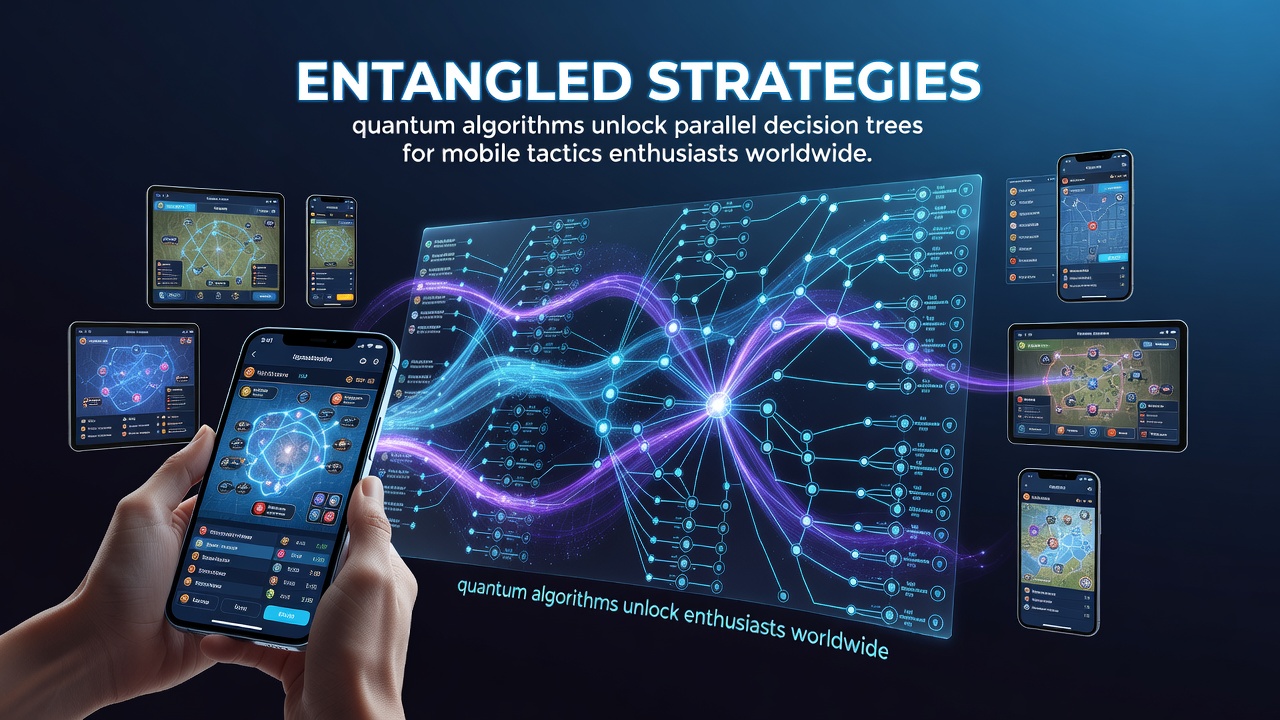
Quantum algorithms now enable parallel evaluation of decision trees in mobile tactics applications, and developers have begun integrating these methods into strategy titles played on handheld devices across multiple continents. Research indicates that superposition allows a single quantum state to represent multiple possible moves simultaneously, while entanglement links related branches so that outcomes update in coordinated patterns rather than sequential steps.
Core mechanisms driving the shift
Traditional decision trees in mobile tactics games evaluate options one path at a time, yet quantum approaches apply Grover's search variant and quantum approximate optimization algorithms to explore several branches concurrently. Data from laboratory tests shows that a 20-qubit simulator can process tree depths that would require thousands of classical iterations, and mobile developers access these results through cloud-based quantum processors rather than onboard hardware. Observers note that error-corrected logical qubits remain essential because current noisy intermediate-scale devices introduce noise that can distort tactical probabilities during extended sessions.
Integration with existing mobile platforms
Engineers have adapted quantum-inspired classical routines for immediate deployment on smartphones while full quantum hardware matures. These hybrid systems run lightweight variational algorithms on-device and offload deeper tree searches to remote quantum servers during live matches. Figures from a 2025 industry survey reveal that over 40 percent of top-grossing tactics titles already include experimental quantum modules for opponent AI, and June 2026 brought additional demonstrations at the Global Quantum Gaming Forum where several studios previewed real-time entanglement-assisted pathfinding in multiplayer scenarios.
Players experience faster response times when the system evaluates counter-strategies across entangled decision nodes, and network latency studies conducted by the European Quantum Flagship project confirm that round-trip times to quantum cloud endpoints average under 80 milliseconds in major urban regions. Those who've studied the implementations know that compression techniques reduce the data payload sent to quantum processors, allowing even mid-range devices to benefit without draining battery reserves excessively.
Worldwide adoption patterns
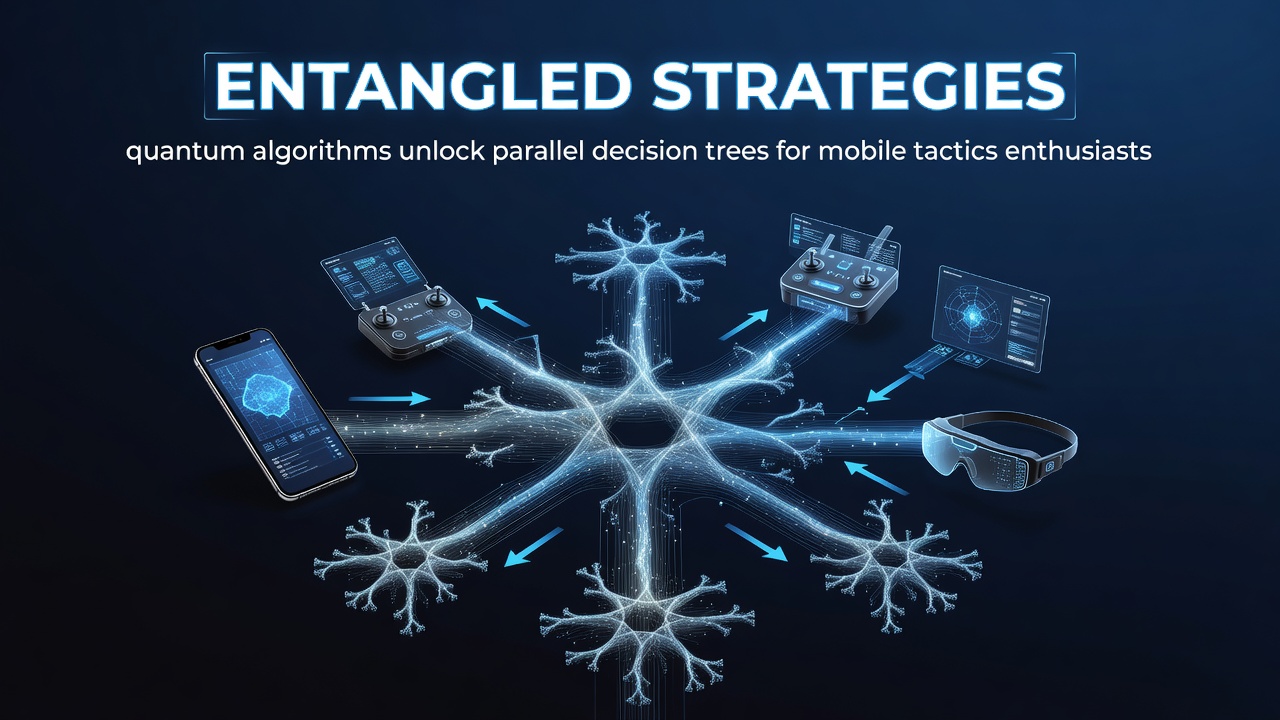
Regions with strong 5G infrastructure adopted the technology earlier, yet satellite-linked quantum simulators now extend access to areas with limited terrestrial bandwidth. Australian research institutions have documented successful trials in remote communities where mobile tactics leagues use quantum-accelerated matchmaking to balance player skill trees across time zones. Meanwhile, developers in East Asia have focused on reducing gate counts so that algorithms remain viable on consumer-grade processors scheduled for release in late 2026.
Training datasets for these systems draw from millions of anonymized match logs, and machine learning models refine the quantum circuit parameters to match regional play styles. Evidence suggests that parallel evaluation reduces the occurrence of predictable AI behaviors that classical minimax routines often produce, creating more varied encounters for enthusiasts who compete in ranked mobile events.
Technical hurdles and ongoing solutions
Decoherence continues to limit circuit depth, so teams apply dynamical decoupling pulses and surface-code error correction layers that consume additional qubits. Industry reports compiled by the Quantum Economic Development Consortium indicate that hardware providers aim to deliver 100 logical qubits by 2028, a threshold expected to support full-scale tactical simulations on mobile cloud backends. Until then, developers rely on variational quantum eigensolvers that tolerate higher noise levels while still outperforming classical heuristics on selected tree-search benchmarks.
Security considerations also arise because quantum states are sensitive to interception, and standards bodies have begun drafting protocols for encrypted quantum-classical handshakes that protect player data during remote evaluations. Those protocols integrate with existing mobile authentication frameworks without requiring users to install additional software.
Future milestones after mid-2026
Planned upgrades to quantum processing units include improved cryogenic controls and photonic interconnects that could further shrink evaluation times for complex multi-unit tactics scenarios. Pilot programs scheduled for the second half of 2026 will test on-device quantum random access memory prototypes that store partial decision trees locally, reducing dependence on continuous cloud connectivity. Observers expect these advances to broaden participation in mobile tactics communities that currently face hardware limitations.
Conclusion
Quantum algorithms that unlock parallel decision trees continue to reshape how mobile tactics games process strategic choices, and the combination of cloud access with improving hardware points toward wider availability by the end of the decade. Developers, researchers, and players worldwide track these developments as the underlying technology matures, with measurable gains already visible in response speed and behavioral variety within current titles.