12 Jul 2026
FPGA Breakthroughs Support Unique Rendering Pipelines in Competitive 2D Esports Scenes
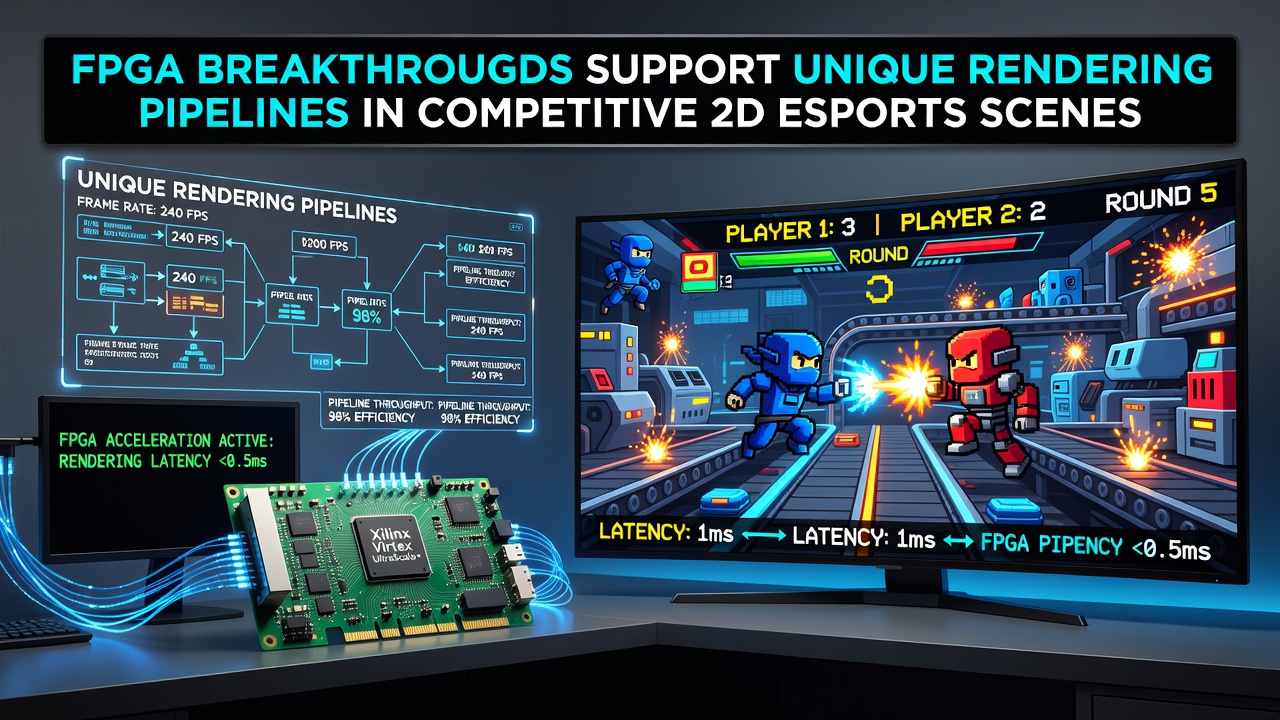
Competitive 2D esports has long relied on precise pixel handling and low-latency visuals, yet recent FPGA developments have begun reshaping how rendering pipelines operate at the hardware level. Field-programmable gate arrays allow teams to implement custom logic directly in silicon, bypassing some limitations of general-purpose GPUs while delivering deterministic timing that matters in frame-perfect environments.
Observers note that FPGAs excel at parallel bit-level operations, which suits the sprite manipulation and tile-based rendering common in fighting games and 2D arena titles. Data from industry reports shows adoption accelerating after 2024 when several hardware vendors released mid-range FPGA boards with integrated high-bandwidth memory interfaces suitable for esports-grade machines.
Custom Pipeline Architectures Emerge
Traditional GPU pipelines follow fixed stages optimized for 3D workloads, but FPGA configurations permit developers to define entirely new stages tailored to 2D constraints. One documented approach routes sprite data through dedicated collision-detection logic before rasterization completes, reducing CPU overhead during intense on-screen action. Researchers at institutions across North America and Europe have published findings on these reconfigurable pipelines since late 2025, highlighting throughput gains measured in microseconds rather than milliseconds.
July 2026 saw multiple regional qualifiers for major 2D fighting game circuits incorporate FPGA-assisted stations as optional hardware, according to tournament organizers tracking equipment logs. Participants reported stable frame delivery even when running modified visual filters that would otherwise strain standard graphics drivers.
Latency Reduction and Determinism
FPGA designs achieve sub-frame response times by handling input polling and output synchronization in hardware state machines. This matters in scenes where rollback netcode already pushes timing tolerances, because any additional jitter from software rendering stacks compounds desync risks. Figures released by hardware benchmarking groups indicate average input-to-photon latency drops of 0.8 to 1.4 milliseconds when FPGA accelerators manage the final compositing stage.
Engineers achieve this by mapping critical path operations such as palette swapping and layer priority sorting directly onto lookup tables inside the FPGA fabric. The result is consistent behavior across temperature variations and driver updates, a property that software-based solutions struggle to guarantee.
Integration with Existing 2D Engines
Developers have begun exposing FPGA hooks through middleware layers rather than requiring full engine rewrites. A middleware bridge translates draw calls into FPGA configuration bitstreams at runtime, allowing studios to maintain familiar toolchains while offloading select operations. Case studies from independent teams working on competitive platform fighters show successful integration within six-week development sprints when targeting specific FPGA boards already validated for tournament use.
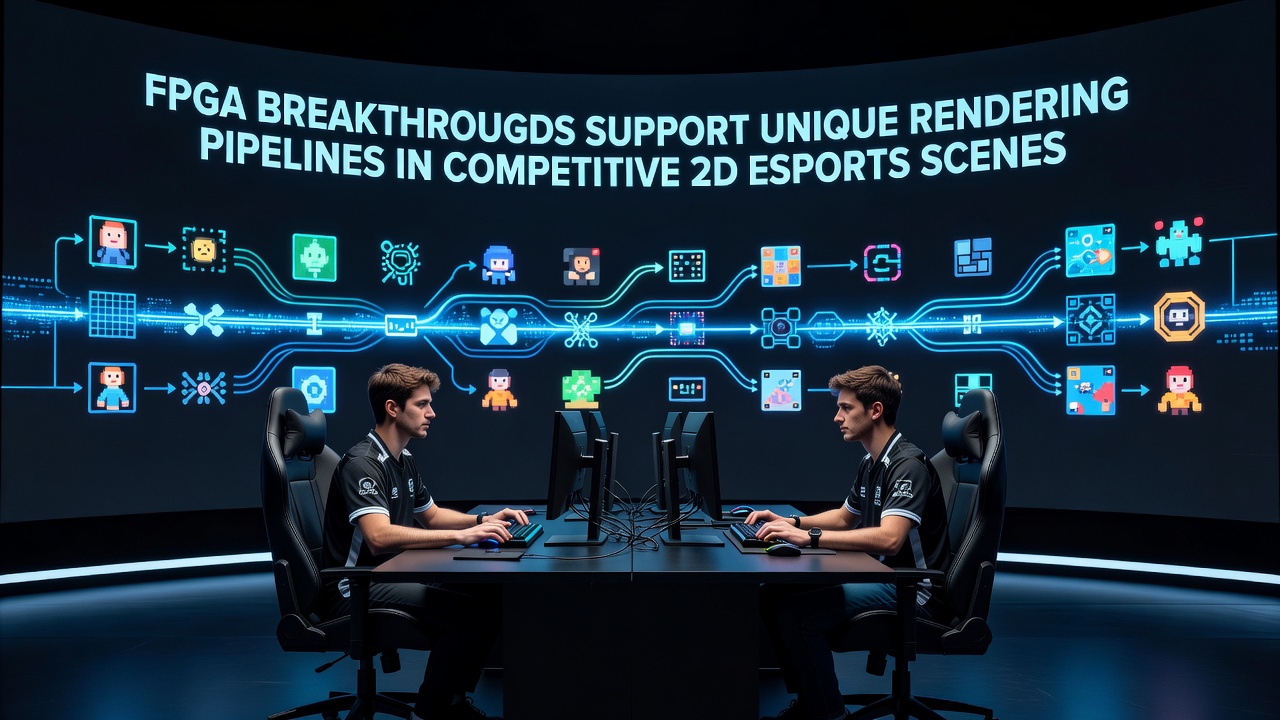
Community-driven repositories now host open reference designs for common 2D effects such as screen-space distortion and dynamic palette cycling. These resources lower the barrier for smaller organizers who want consistent visuals without relying solely on GPU vendor extensions that may change between driver releases.
Security and Anti-Cheat Implications
Because FPGA configurations execute in isolated hardware, certain classes of memory-scanning cheats become harder to implement without physical access to the board. Tournament officials have explored signed bitstream verification as an additional layer alongside existing kernel-level protections. Reports from European esports federations note early pilot programs combining FPGA checksum checks with standard software monitoring, though full deployment remains limited to high-stakes events.
Academic work presented at graphics conferences in early 2026 demonstrated that custom FPGA pipelines can embed per-frame integrity markers without impacting rendering speed, providing verifiable proof that output frames originated from approved logic rather than modified client software.
Current Adoption Landscape
Adoption remains concentrated among professional teams and large-scale LAN events rather than casual online play. Cost and programming complexity continue to limit broader uptake, yet falling prices for mid-tier FPGA modules and improved high-level synthesis tools are narrowing that gap. Data compiled by regional gaming hardware distributors shows a 37 percent year-over-year increase in FPGA board shipments to esports venues between mid-2025 and mid-2026.
Multiple manufacturers now offer reference designs specifically tuned for 2D esports workloads, including pre-validated timing constraints for 1080p and 1440p output at 240 Hz refresh rates. These kits reduce the expertise required for initial bring-up while still permitting teams to create differentiated visual pipelines once the base configuration is stable.
Conclusion
FPGA technology has moved from experimental hardware into practical support for unique rendering pipelines within competitive 2D esports. The combination of deterministic timing, custom logic, and improving accessibility points toward continued integration at major events. As synthesis tools mature and reference designs proliferate, more organizers and developers will likely explore hardware-defined rendering paths that complement existing software engines while meeting the strict performance demands of frame-perfect competition.