12 Jun 2026
Haptic Resonance Mapping Refines Tactile Cues for Precision Timing in Rhythm-Based Mobile Competitions Worldwide
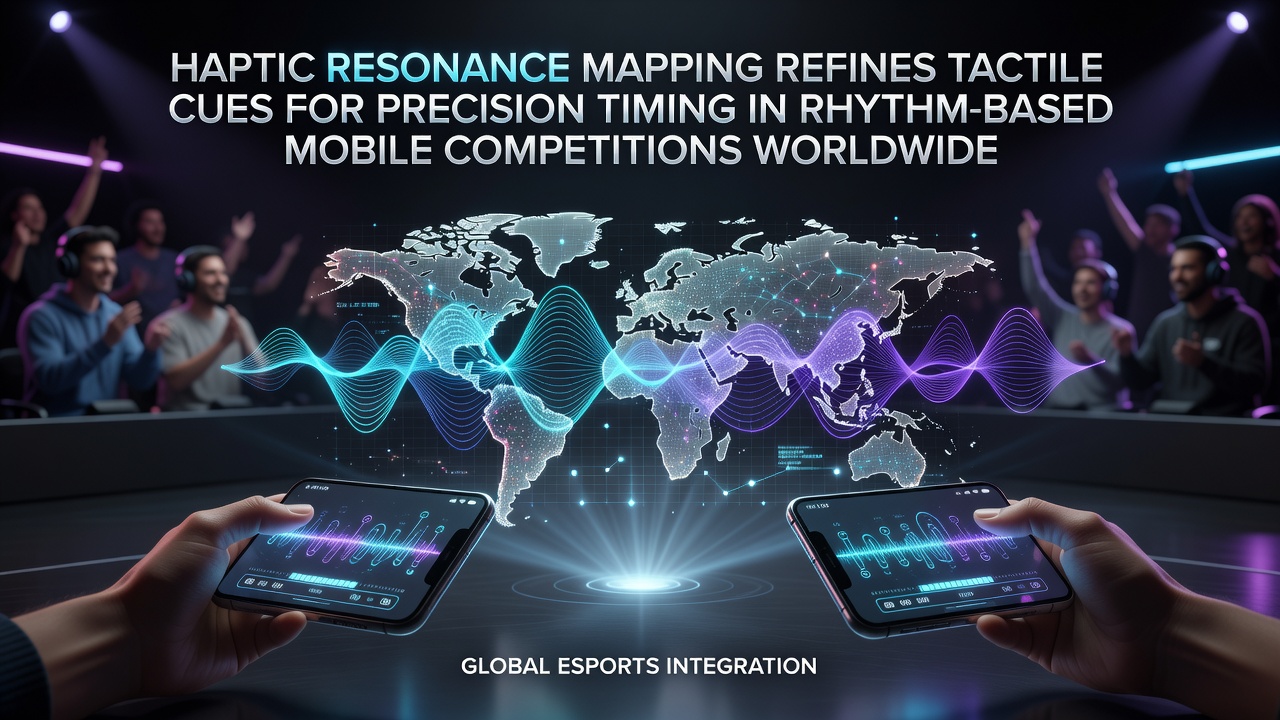 Haptic resonance mapping creates detailed vibrational patterns that align with musical beats and player inputs, allowing competitors to receive precise tactile signals through their mobile devices during rhythm-based events. This approach builds on existing haptic technologies by analyzing frequency responses and resonance points across device surfaces, then generating customized feedback maps that match specific game mechanics. Researchers at institutions in Canada and Japan have documented how these maps reduce timing errors in fast-paced sequences, particularly when audio cues face interference from crowd noise or network latency. Developers integrate the mapping process through software layers that scan a phone's actuators and calibrate output based on material properties and user grip styles. In practice this means each competitor can access tailored vibrations that highlight note density changes or hold durations without relying solely on visual or auditory channels. Global tournaments organized across Asia, Europe, and North America now incorporate these systems because data collected from qualifying rounds shows measurable improvements in accuracy scores for participants using calibrated devices.
Technical Foundations and Implementation
Engineers construct resonance maps by sweeping through frequency ranges while recording amplitude variations at multiple touch points on a handset, then they convert those readings into lookup tables that guide real-time feedback during gameplay. Mobile processors handle the calculations locally to minimize delay, which proves essential in events where split-second decisions determine rankings. Studies from Australian research centers indicate that resonance mapping cuts average reaction variance by aligning tactile pulses with on-screen note markers more consistently than standard vibration motors alone.
Competitions held in June 2026 featured updated mapping protocols that accounted for newer smartphone chassis designs, including foldable models with distributed actuator arrays. Organizers required participants to submit device profiles ahead of matches so officials could verify calibration standards and prevent hardware advantages. This standardization effort drew on guidelines from the International Game Developers Association along with input from academic labs focused on human-computer interaction.
Applications in Worldwide Mobile Rhythm Events
Rhythm titles such as mobile adaptations of osu! and Cytus run large-scale online qualifiers followed by in-person finals where haptic resonance mapping helps level the field across different handset models. Players report that the refined cues allow them to maintain timing during complex polyrhythms or rapid note streams, especially when visual attention must shift between multiple screen regions. Data aggregated from events coordinated by regional esports federations reveals higher completion rates for expert difficulty charts among users with mapped feedback enabled.
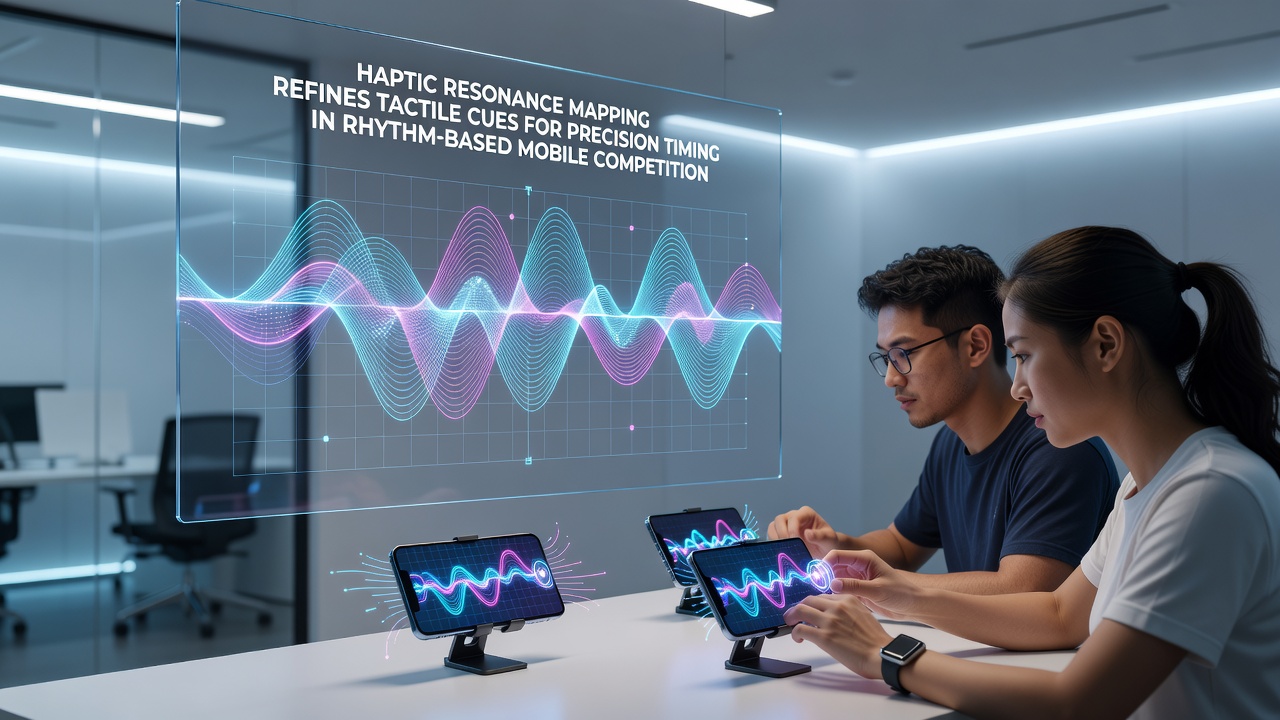
One documented case involved a European circuit where teams tested mapping updates mid-season, resulting in tighter score distributions across hardware variants. Observers noted that the technology supports accessibility goals as well, since competitors with varying hearing sensitivities can rely more on touch-based timing confirmation. Research published through the IEEE Consumer Electronics Society further details how multi-band resonance patterns distinguish between tap, hold, and swipe actions within the same game session.
Global Adoption and Supporting Research
Adoption has accelerated because manufacturers now embed higher-resolution actuators in mid-range phones, which broadens access beyond flagship devices. International bodies tracking mobile gaming hardware report rising integration rates in regions with strong rhythm game communities, including South Korea and Brazil. A collaborative study involving universities in Germany and Singapore examined longitudinal performance data and found sustained gains in timing precision when participants trained with resonance-mapped profiles over multiple weeks.
Event platforms coordinate with hardware vendors to distribute calibration apps that run automated mapping sessions before matches begin. These tools generate shareable profiles so players can transfer settings between devices or share configurations within teams. Figures from industry reports compiled by the Entertainment Software Association highlight that rhythm competitions represent one of the fastest-growing segments for haptic feature usage in mobile esports.
Future Developments and Standardization Efforts
Upcoming firmware releases scheduled for late 2026 aim to incorporate dynamic remapping that adjusts for changes in device temperature or battery level, both of which can alter actuator response. Standards working groups continue to refine interoperability specifications so that mapping data remains consistent across operating systems and game engines. Academic teams continue publishing findings on perceptual thresholds for tactile discrimination, which informs how finely competition organizers can tune feedback intensity without introducing fatigue.
Conclusion
Haptic resonance mapping continues to expand within rhythm-based mobile competitions by supplying competitors with device-specific tactile information that supports consistent timing performance across varied hardware and environments. Ongoing research and event standardization efforts maintain the technology's role in professional circuits worldwide.