5 Jun 2026
How Sensor Fusion in Wearable Devices Is Reshaping Reaction Training for Fighting Game Competitors
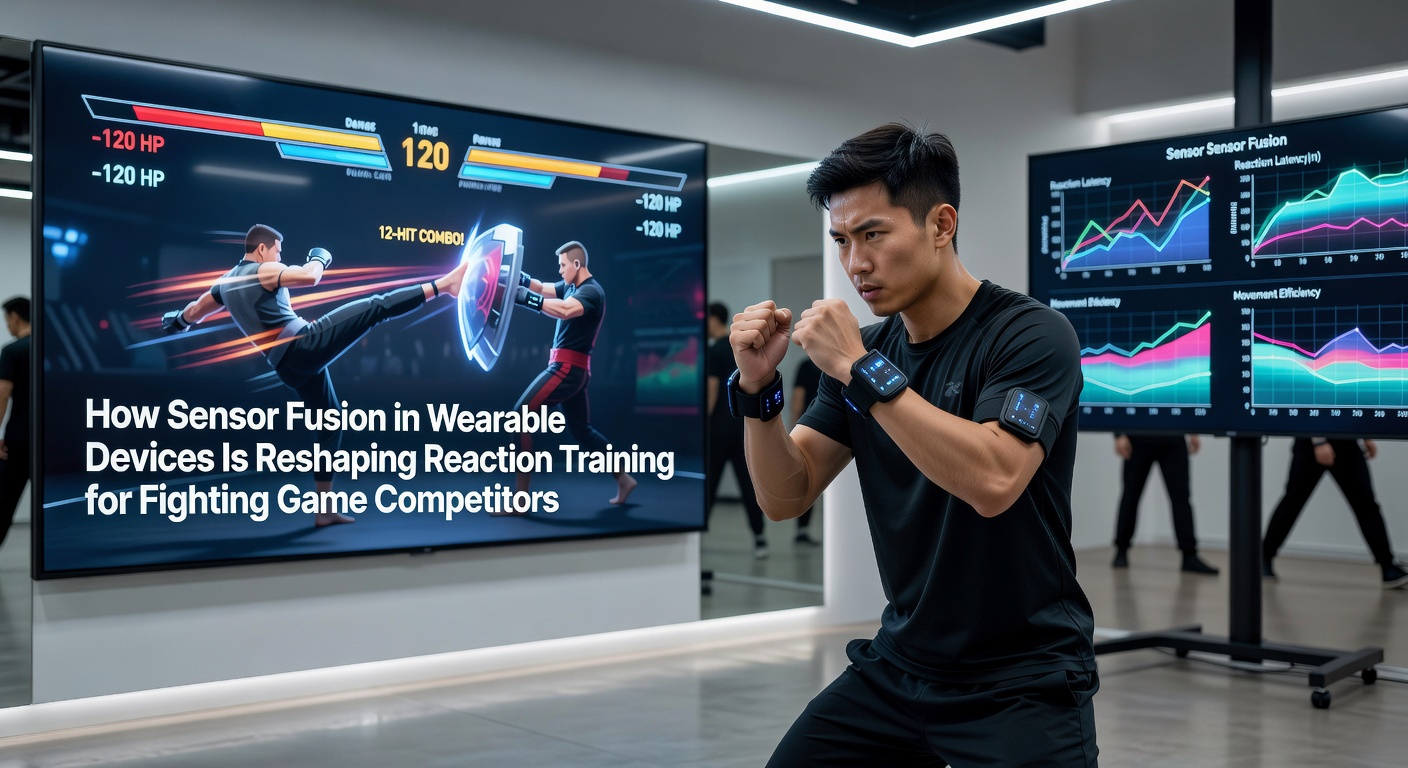
Competitors in fighting games have started integrating sensor fusion technology from wearable devices into their daily preparation routines, and the approach combines inputs from accelerometers, gyroscopes, magnetometers, and heart rate monitors to create detailed profiles of movement and response patterns. This integration allows training systems to process multiple data streams simultaneously, which produces more accurate assessments of reaction timing than single-sensor setups could achieve on their own.
Core Components of Sensor Fusion Systems
Modern wearables designed for esports athletes collect raw signals across several axes at once, then apply filtering algorithms to reduce noise and align the readings into a unified output. Researchers at institutions such as the University of Melbourne have documented how these combined datasets help identify micro-adjustments in posture and limb velocity that precede successful counter-moves in titles like Tekken and Street Fighter. The fusion process typically runs on-device or through paired mobile applications, delivering feedback within milliseconds so that athletes can adjust their next repetition immediately.
Training platforms now link the fused sensor data to visual or haptic cues that simulate in-game scenarios, and this setup lets competitors practice specific reaction chains without requiring a full console setup at every session. Observers note that the same hardware often tracks recovery intervals between high-intensity bursts, which gives coaches measurable indicators of fatigue accumulation over extended practice blocks.
Application in Reaction Drills
Fighting game athletes use the technology during shadow drills and reaction ladder exercises where timing windows shrink progressively. The fused sensor output highlights deviations in wrist rotation speed or shoulder stability that correlate with missed parries or delayed throws. One documented case involved a regional circuit player who reduced average block reaction time by 18 milliseconds after eight weeks of sensor-guided sessions, according to logs shared at the 2025 Asia-Pacific Esports Technology Summit.
Data collected across multiple devices also feeds into predictive models that forecast likely opponent actions based on the athlete's own historical movement signatures. These models update in real time as new readings arrive, which creates a closed-loop training environment that adapts difficulty on the fly.
Integration With Existing Esports Infrastructure
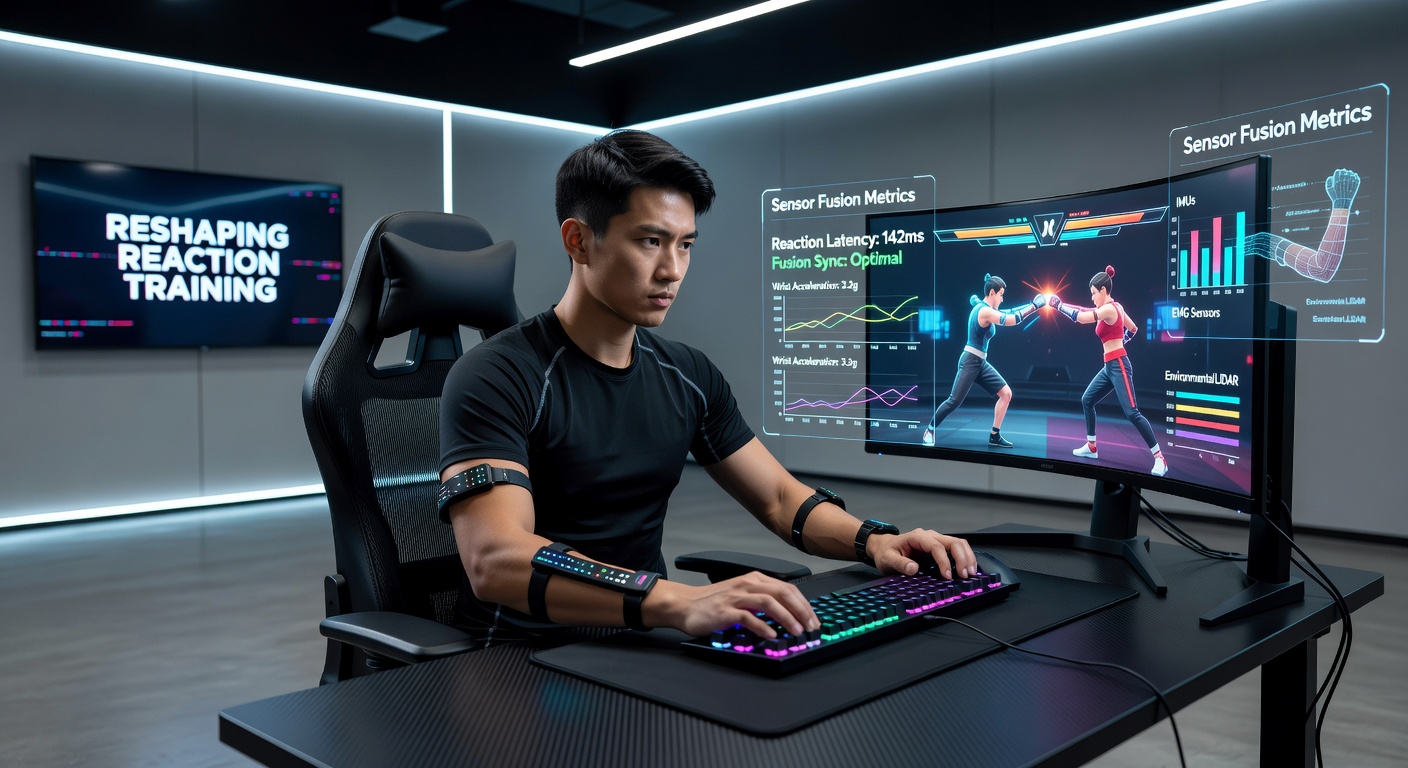
Many professional teams now route wearable outputs into the same analytics suites that record match footage, and this combination produces side-by-side comparisons of live tournament performance versus controlled training environments. The approach gained additional visibility in June 2026 when the European Esports Federation piloted standardized sensor protocols during its mid-season qualifiers, requiring participants to submit anonymized fusion datasets for post-event review.
Hardware manufacturers have responded by releasing modular wristbands and chest straps that maintain compatibility across different fighting game controllers, and calibration routines now account for variations in grip style and seating position common among competitors. Trade groups such as the International Esports Equipment Standards Board have published interoperability guidelines that encourage consistent data formats so that training apps can import readings from multiple brands without manual conversion steps.
Performance Metrics and Tracking Trends
Longitudinal studies conducted by biomechanics labs show that athletes who incorporate sensor fusion maintain tighter distributions of reaction times across repeated trials, whereas control groups relying on traditional stopwatch methods exhibit wider variance. Heart rate variability readings fused with movement data further allow trainers to distinguish between cognitive hesitation and physical delay, which refines the focus of subsequent drills.
Figures released by the Canadian Institute for Athletic Technology in early 2026 indicated that 62 percent of surveyed fighting game competitors at the national level had adopted at least one wearable device with fusion capabilities, up from 29 percent two years prior. These adoption rates align with broader availability of consumer-grade units that process sensor streams locally rather than requiring constant cloud connectivity.
Future Hardware and Software Developments
Developers continue to refine on-device machine learning models that run the fusion algorithms, and newer chipsets reduce latency while extending battery life during multi-hour sessions. Some prototypes now embed additional pressure sensors in finger sleeves to capture grip force alongside limb kinematics, which expands the range of measurable inputs relevant to command inputs on arcade-style sticks.
Software updates scheduled for late 2026 aim to incorporate opponent modeling drawn from aggregated league data, although individual privacy controls remain a central design requirement. The resulting systems present athletes with scenario libraries tailored to their recorded weaknesses while preserving anonymity across shared datasets.
Conclusion
Sensor fusion in wearable devices supplies fighting game competitors with granular, multi-source feedback that refines reaction training protocols across both amateur and professional levels. Continued hardware improvements and standardized data practices support wider adoption, while research institutions track performance outcomes to guide further refinements. The technology integrates directly into existing practice frameworks without displacing traditional sparring or console-based repetition, and it supplies objective measurements that complement subjective coaching observations.