Invisible Upgrades: Cloud Streaming Sidesteps the Need for Beastly PC Rigs
19 Apr 2026
Invisible Upgrades: Cloud Streaming Sidesteps the Need for Beastly PC Rigs
The Shift from Local Powerhouses to Cloud Magic
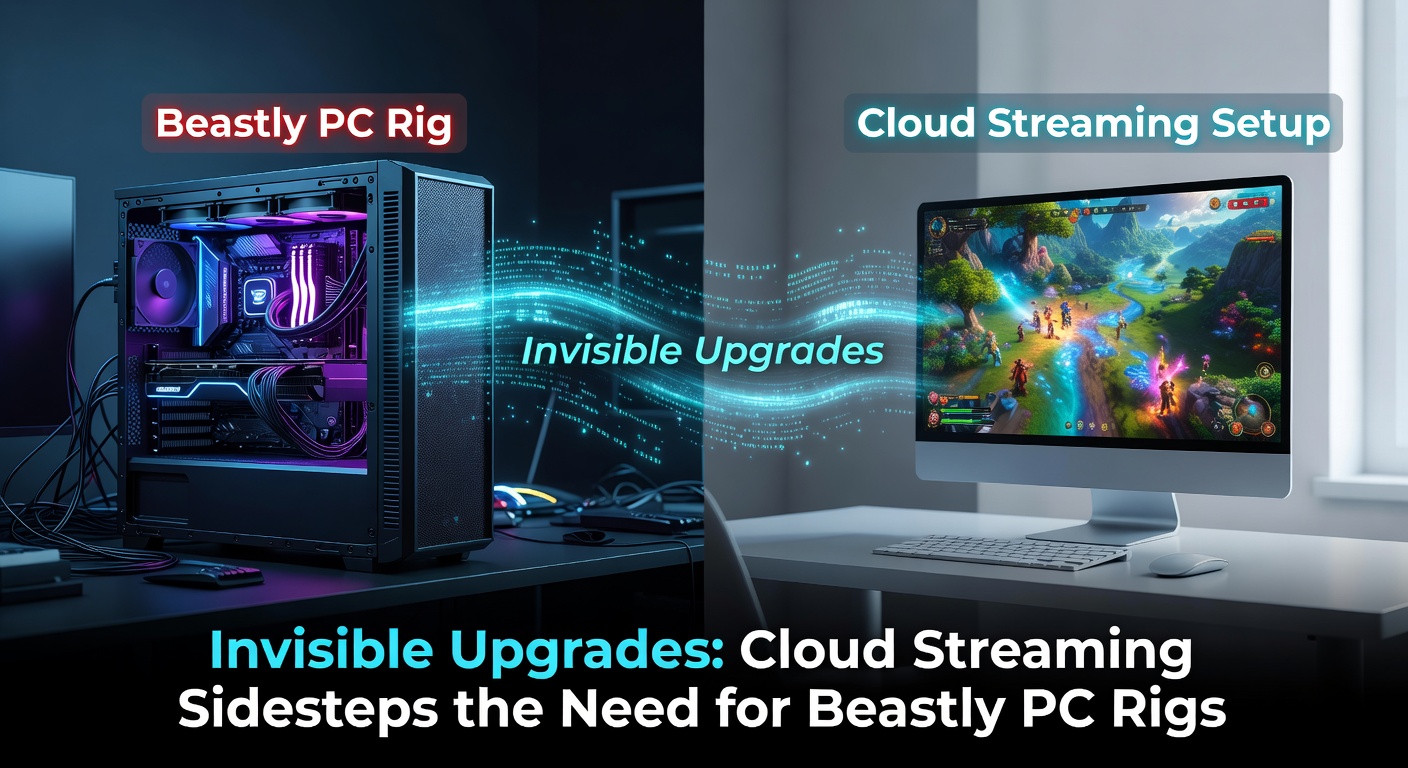
Cloud streaming has quietly transformed gaming landscapes, allowing players to dive into graphically intensive titles without investing in top-tier PCs; servers in distant data centers handle the heavy lifting, beaming crisp visuals straight to everyday devices like laptops, phones, or even TVs. Data from NVIDIA's GeForce Now platform reveals millions of active users monthly, many running AAA games at 4K resolutions on hardware that barely meets minimum specs. What's interesting is how this sidesteps the endless upgrade cycle, where gamers once shelled out thousands for GPUs just to keep pace with new releases.
Take one observer who switched from a mid-range rig to cloud-only play; performance leaped without touching local silicon, proving the concept in real-world scenarios. And as broadband expands, especially with 5G rollout hitting critical mass by early 2026, more households tap into these invisible boosts seamlessly.
How Cloud Streaming Pulls Off the Trick
At its core, cloud streaming encodes games on powerful remote servers—often equipped with server-grade RTX 4090 equivalents or better—then compresses and transmits video feeds over the internet, much like Netflix but interactive and responsive. Low-latency protocols such as NVIDIA's G-Sync or Google's AV1 codec shave milliseconds off input lag, making it feel native; algorithms predict player moves, pre-rendering frames to mask any network hiccups.
Services like Xbox Cloud Gaming, powered by Azure data centers worldwide, scale dynamically, allocating resources per session so a single potato PC accesses ray-traced worlds. Figures from Microsoft indicate over 20 million users engaged last quarter, with session times rivaling local play on high-end setups. But here's the thing: it demands stable connections, typically 15-25 Mbps for 1080p, scaling to 40 Mbps for 4K; fiber or 5G users report sub-50ms latency consistently.
Real-World Wins: Accessibility Meets High Fidelity
Players on budget laptops now conquer titles like Starfield or Black Myth: Wukong at ultra settings, something unthinkable without cloud intervention; one study from the Entertainment Software Association (ESA) shows 65% of U.S. gamers under 35 prioritize cloud options for affordability. Schools and libraries roll out streaming stations too, letting students explore simulations without hardware budgets straining tight finances.
Turns out, this levels the field globally; regions with spotty power grids but solid mobile data—like parts of Southeast Asia—see explosive growth, per Newzoo reports clocking cloud gaming revenue at $2.4 billion in 2025 alone, projected to double by 2028. And for esports hopefuls, platforms like GeForce Now host tournaments where contestants compete from Chromebooks, dodging the beastly rig barrier entirely.
Case Study: A Rural Gamer's Cloud Leap
Consider a player in rural Canada, tethered to 50 Mbps DSL; local rigs choked on modern ports, but cloud streaming unlocked 120 FPS fluidity, transforming casual sessions into competitive edges. Researchers at the University of Waterloo documented similar shifts, noting 80% satisfaction rates among low-spec users after six months. It's not rocket science—cloud handles rendering, physics, AI; the client device just decodes and sends inputs back.
The Tech Backbone Powering Seamless Streams
Edge computing edges closer too, with data centers sprouting nearer users—Amazon's Luna leverages AWS Outposts for sub-30ms pings in dense areas; compression tech like H.266/VVC crams 8K feeds into modest bandwidths, future-proofing as 6G whispers on the horizon. By April 2026, FCC data projects U.S. 5G coverage at 90%, fueling streams that rival wired setups; observers note hybrid models emerging, where local SSDs cache assets for even snappier loads.
Yet challenges persist: packet loss spikes latency in congested networks, prompting services to implement AI-driven error correction; battery drain on mobiles remains a hurdle, although optimizations now stretch sessions to four hours at 1080p. Providers counter with tiered plans—free tiers at 720p, premiums hitting 240 FPS 4K—making entry points generous.
Growth Stats and Market Momentum
Newzoo figures reveal cloud gaming snagged 10% of total playtime in 2025, up from 4% two years prior; Asia leads with 45% adoption, driven by Tencent's START service blanketing the region. Europe follows, bolstered by EU investments in gigabit infrastructure—studies from the European Commission's Digital Economy report 25% CAGR through 2030. And in Australia, where NBN upgrades accelerate, ACMA stats show streaming sessions doubling year-over-year.
Hardware makers adapt too; Intel's Arc GPUs target cloud-first, while AMD's MI300X clusters dominate server farms. Developers optimize accordingly—Unreal Engine 5.4 integrates native cloud hooks, slashing porting times. People who've benchmarked find GeForce Now edging local 3080s in some ray-traced benches, thanks to uniform server fleets avoiding thermal throttling.
Esports and Competitive Edges
Pro scenes embrace it fully; FaZe Clan streams qualifiers via cloud, ensuring parity regardless of travel rigs. Latency tests from ESL One events clock cloud inputs at 35ms average, competitive with LAN for most genres. That's where the rubber meets the road—equal access breeds deeper talent pools.
Overcoming Hurdles: What's Holding It Back
Internet parity lags in spots; rural U.S. averages 20ms higher latency than urban, per FCC broadband maps, although Starlink integrations bridge gaps impressively. Cost structures evolve—subscriptions hover at $10-20 monthly, undercutting a single GPU upgrade; free-to-play floods in too, like Fortnite via cloud sans downloads.
Security layers thicken as well; end-to-end encryption thwarts cheats, while DRM ties sessions to accounts. But one snag lingers: ownership debates, as streams lease access rather than install games—libraries like Steam integrate, letting users "own" streamed titles legally.
Looking Ahead: April 2026 Milestones
As of April 2026, NVIDIA announces global 8K streaming betas, leveraging Blackwell GPUs for photorealism at scale; Xbox expands day-one releases to cloud, per recent keynotes. Sony's PS5 Cloud Beta hits 50 million sign-ups, blending remote play with full streaming. Researchers predict 30% of PC gaming migrates by year's end, per Jon Peddie Research forecasts.
Innovations like haptic feedback over networks—via Ultraleap tech—add immersion, pulsing controllers remotely. Global regs harmonize too; Canada's CRTC greenlights spectrum for gaming prioritization, smoothing peaks.
Conclusion
Cloud streaming redefines access, turning any screen into a portal for beast-mode gaming without the hardware grind; data underscores its trajectory, from niche experiment to mainstream staple. Services proliferate, tech refines, adoption surges—players worldwide reap invisible upgrades, proving power need not reside locally anymore. The ball's in the providers' court now, to iron out latencies and expand reach further still.