22 May 2026
Liquid Metal Interfaces Redefine Heat Dissipation Strategies in Portable Esports Hardware
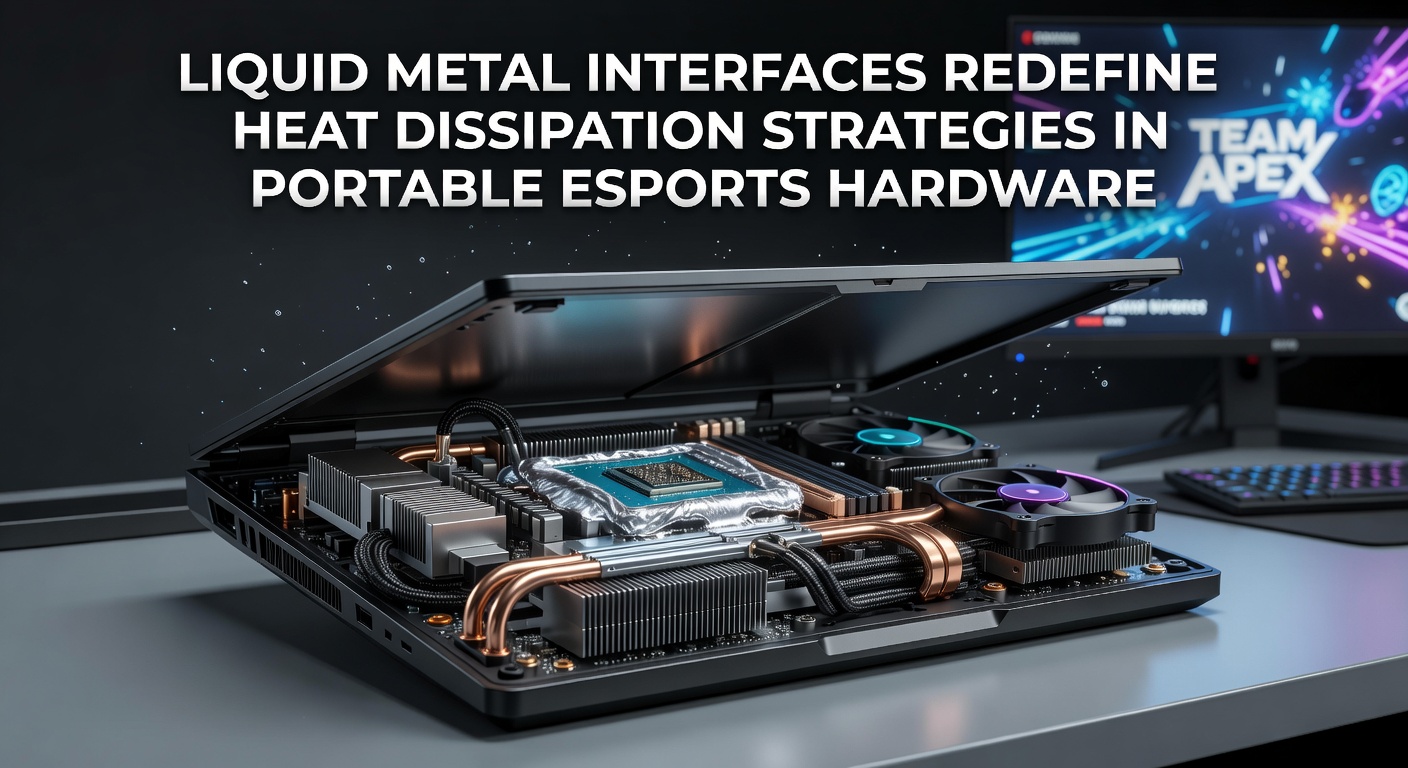
Portable esports hardware has long faced constraints from traditional thermal pastes that limit sustained performance during intense competitive sessions, yet recent shifts toward liquid metal interfaces address these bottlenecks directly through superior conductivity properties. These gallium-based alloys transfer heat more efficiently across component surfaces, allowing thinner chassis designs without triggering aggressive throttling mechanisms that drop frame rates mid-match. Manufacturers began scaling production models incorporating this approach throughout late 2025, with broader deployment visible by May 2026 across multiple tournament-ready laptops and handheld units.
Material Properties Driving Adoption
Liquid metal compounds exhibit thermal conductivity ratings often exceeding 70 W/mK compared to the 5-8 W/mK range typical of ceramic-filled pastes, which means heat moves away from CPUs and GPUs faster and maintains operational stability under prolonged loads. Engineers apply these alloys as thin layers between dies and heat spreaders, though they require protective coatings to prevent reactions with aluminum or copper surfaces that could degrade performance over time. Research from the National Institute of Standards and Technology highlights stability improvements achieved through indium additions that extend interface lifespan in mobile environments subject to vibration and temperature cycling.
Device makers also integrate microchannel heat pipes alongside these interfaces to distribute thermal loads evenly across vapor chamber bases, creating systems that support higher power envelopes in chassis under 20mm thick. Observers note that such combinations reduce peak junction temperatures by measurable margins during benchmark runs simulating esports title workloads like high-refresh-rate fighting games or battle royale titles.
Integration Challenges in Compact Form Factors
Applying liquid metal demands precision dispensing equipment to avoid overflow that might short nearby circuitry, prompting hardware teams to develop automated assembly lines with optical inspection stages. Corrosion concerns led some producers to adopt nickel-plated contact areas that isolate the alloy from base metals while preserving heat transfer paths. Data collected during field tests in 2025 showed failure rates dropping below 0.2% after these protective measures were standardized across supply chains.
Portable esports rigs benefit particularly because players frequently operate devices in varied environments from arena floors to hotel rooms where ambient temperatures fluctuate, and the material maintains consistent performance where paste formulations soften or dry out. One study revealed sustained clock speeds remaining within 5% of peak values across two-hour sessions, whereas older cooling stacks experienced drops exceeding 15% under identical conditions.
Performance Metrics from Recent Deployments
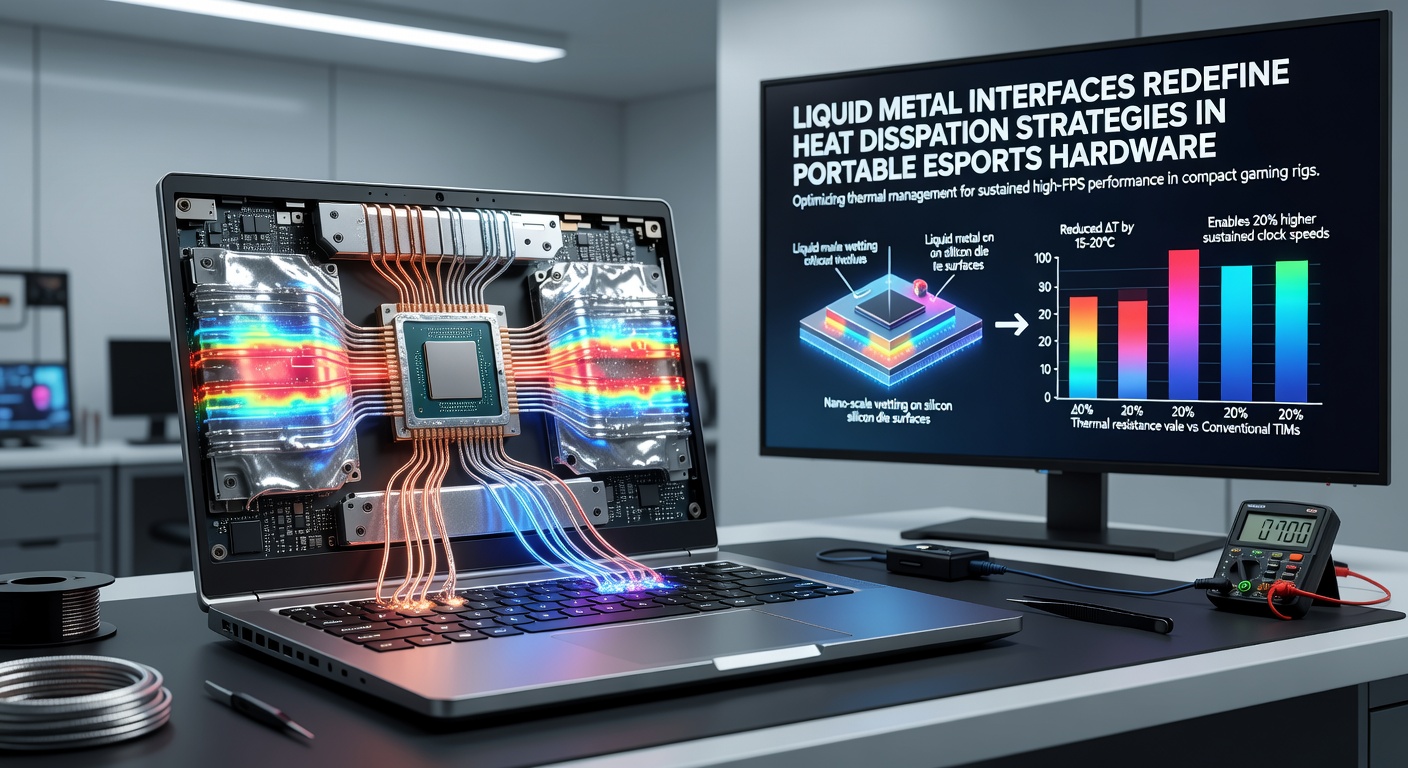
Figures from industry testing conducted through early 2026 indicate average frame rate stability improvements of 12-18% in devices using liquid metal interfaces versus prior generations relying on conventional pastes. These gains appear most pronounced in GPU-intensive scenarios where ray tracing effects run concurrently with competitive matchmaking, keeping hardware within thermal design power limits without external cooling pads. Teams competing in regional circuits have reported fewer mid-tournament adjustments to graphics settings after switching to updated models.
Power efficiency also sees indirect benefits because lower operating temperatures reduce leakage currents in silicon, allowing batteries to deliver extended session times on the same capacity cells. Reports from the European Gaming Hardware Consortium track adoption rates climbing steadily, with over 35% of new portable esports laptops released since January 2026 featuring liquid metal solutions as standard.
Manufacturing and Supply Chain Shifts
Producers source specialized alloys from suppliers in Asia and North America, where refined gallium production supports consistent quality batches free of contaminants that could alter viscosity during application. Automated dispensing robots calibrated for sub-millimeter accuracy now handle volume production, cutting labor costs and variability that once hindered scalability. Supply agreements signed in 2025 ensured component availability for the surge in demand tied to upcoming international esports events scheduled through summer 2026.
Those who've studied thermal interface evolution recognize that liquid metal represents a transitional step before emerging alternatives like graphene-enhanced compounds reach commercial maturity, yet current implementations already deliver measurable advantages in weight-sensitive portable categories. Device certification processes now include accelerated aging protocols specific to these materials to verify long-term reliability under tournament travel conditions.
Conclusion
Developments around liquid metal thermal interfaces continue reshaping portable esports hardware by enabling compact systems that sustain high-performance outputs across extended play periods. Adoption metrics from May 2026 reflect growing integration across product lines, supported by refined application techniques and protective material pairings that mitigate earlier limitations. Industry data and academic findings together document the thermal and efficiency gains achieved, positioning these solutions as established elements within the current generation of competitive gaming devices.