7 Jun 2026
Microcontroller Optimizations Extend Battery Life in Handheld Racing Simulators
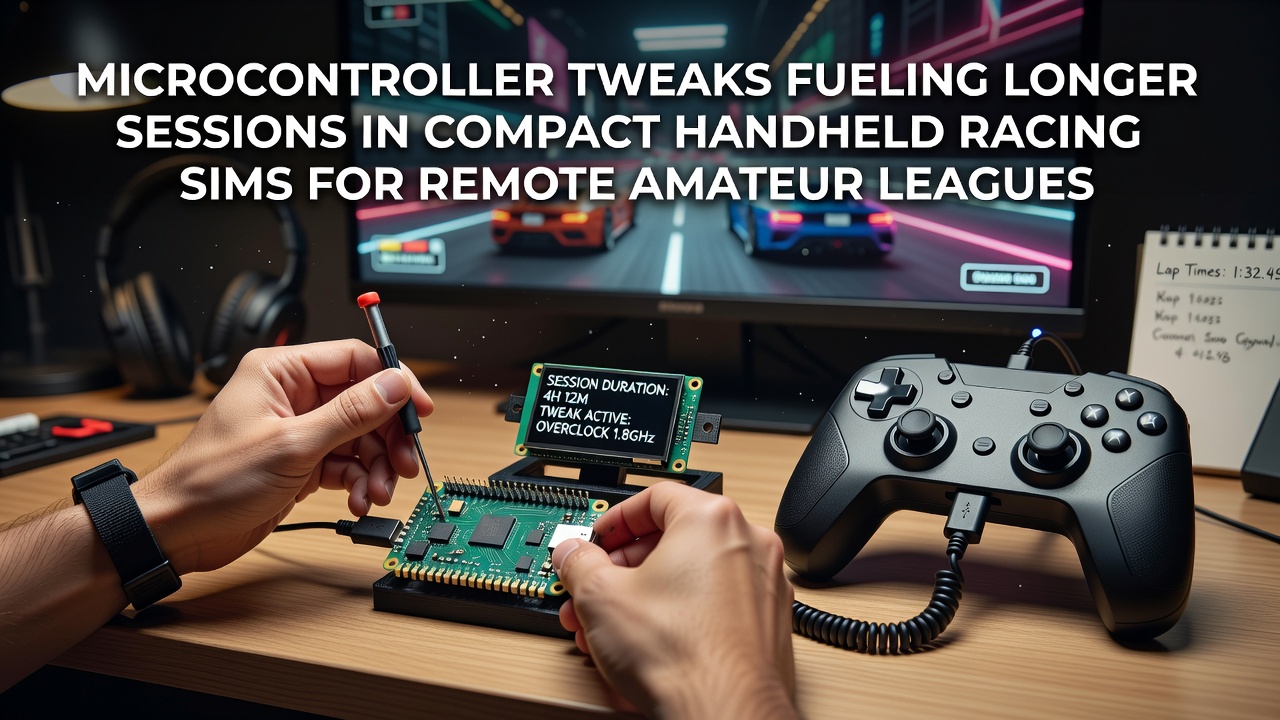 Developments in microcontroller firmware have enabled extended operation times for compact handheld racing simulators used in remote amateur leagues, where participants connect through online platforms for competitive events without requiring large-scale hardware setups. Engineers adjust clock frequencies, implement dynamic voltage scaling, and refine interrupt handling routines to reduce overall power draw while maintaining precise input response for steering, throttle, and brake inputs. These modifications target common architectures such as ARM Cortex-M series chips found in many portable sim devices. Data from component manufacturers indicates that selective power gating of unused peripherals can lower consumption by up to 35 percent during idle periods between race sessions. Teams working on firmware for these systems often integrate low-power sleep modes that activate automatically when no controller activity registers for several seconds, then wake instantly upon input detection to preserve real-time performance.
Technical Adjustments in Firmware Design
Programmers rewrite polling loops to use event-driven architectures instead of constant scanning, which cuts unnecessary processor cycles in compact racing rigs. One documented approach involves configuring timers to trigger sensor reads only at fixed intervals aligned with frame updates from the connected display, thereby synchronizing power usage with actual gameplay demands. Research conducted at institutions across North America has shown that such synchronization yields measurable gains in session duration without compromising the sub-millisecond latency required for competitive racing simulations.
Wireless communication modules receive similar attention, with developers enabling shorter transmission bursts and adaptive power levels based on signal strength between the handheld unit and the player's local network. This matters for remote leagues where stable connections support synchronized multiplayer races across different time zones. Figures released by embedded systems groups in the Asia-Pacific region reveal that optimized radio duty cycles have contributed to average play extensions of 45 minutes per charge cycle in tested prototypes.Application in Remote Amateur Leagues
Remote amateur racing leagues have adopted these tweaked devices because they allow participants to complete full event schedules on single battery charges, reducing interruptions during scheduled heats. League organizers report that standardized firmware updates distributed through community repositories ensure consistent performance across varied hardware revisions, supporting fair competition among members located in different countries.
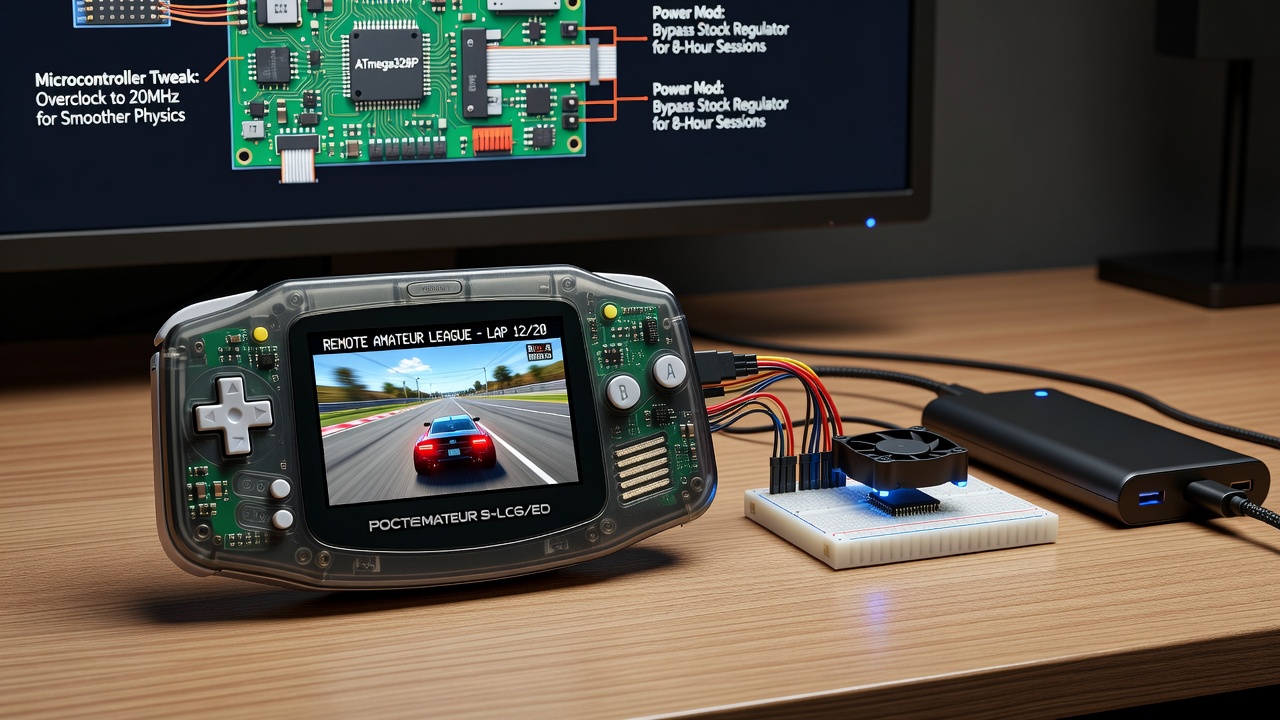 Take one European league that integrated these changes ahead of its 2025 season finals. Participants completed extended endurance races lasting over two hours without power interruptions, according to post-event summaries shared among organizers. The same pattern appears in North American circuits, where data logs from devices show reduced peak current draws during high-intensity cornering sequences simulated through force feedback motors.
Integration with Existing Hardware Ecosystems
Manufacturers incorporate these microcontroller refinements into new production runs while providing over-the-air update paths for earlier models, allowing broader access without hardware replacement. Compatibility testing with popular open-source simulation software packages ensures that input mappings remain accurate after firmware changes, which supports the variety of vehicle physics models used across different league formats.
Observers note that temperature monitoring routines added to the firmware prevent thermal throttling during prolonged use, maintaining consistent processing speeds even when ambient conditions vary. This proves relevant for players competing from home environments where ventilation differs widely. Industry reports from regulatory bodies in Australia highlight how such thermal controls align with efficiency standards for portable consumer electronics entering the market around mid-2026.
Future Developments Expected by June 2026
Additional refinements under evaluation include machine learning models that predict usage patterns and pre-adjust power states accordingly, though these remain in controlled testing phases at several university labs. Projections shared at embedded technology conferences suggest cumulative gains could push average session lengths beyond four hours on devices under 500 grams, expanding options for longer tournament formats in remote settings.
Conclusion
Collectively these microcontroller-level changes demonstrate how targeted firmware work supports longer operational windows for compact racing simulators without altering core gameplay mechanics. Remote amateur leagues benefit through increased scheduling flexibility and reduced logistical demands on participants, as evidenced by ongoing adoption trends tracked by hardware monitoring services. Continued collaboration between developers and league communities will likely yield further incremental improvements as device platforms evolve.