19 Jul 2026
Microfluidic Cooling Systems Advance Thermal Management in High-Performance Mobile Gaming Devices During Extended Esports Qualifiers
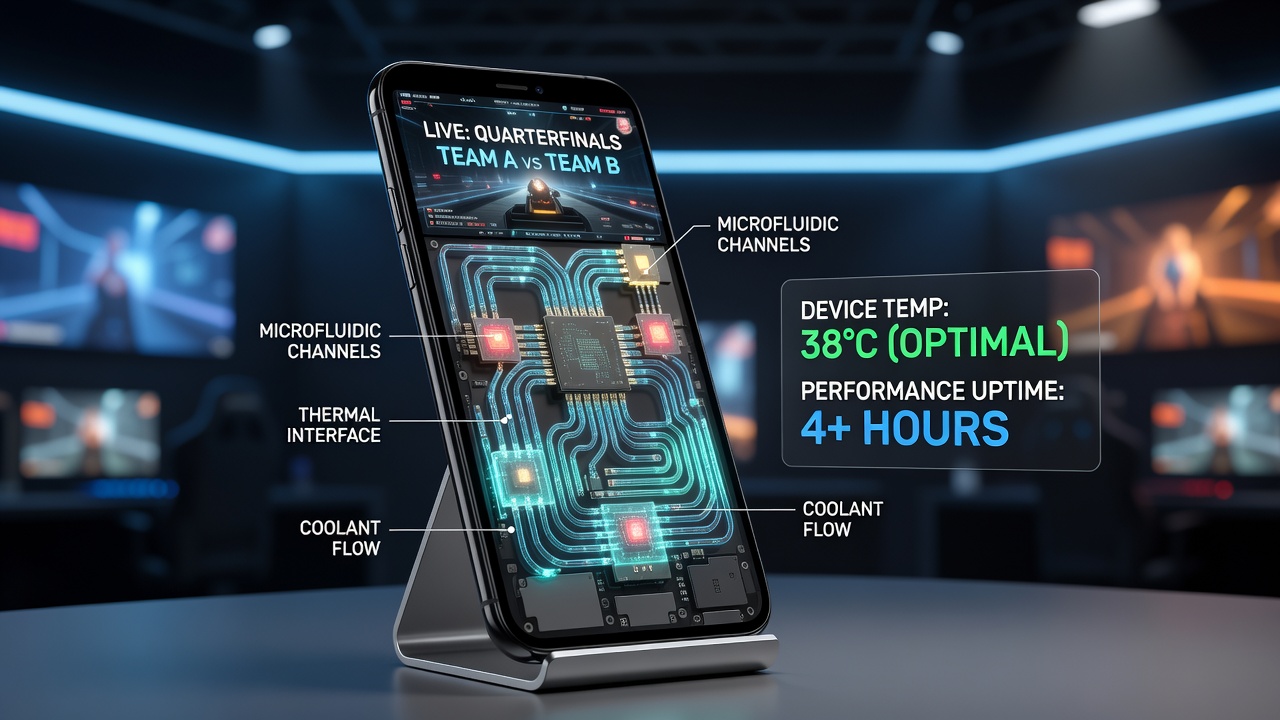
Engineers have developed microfluidic cooling systems that circulate tiny volumes of liquid through microscale channels embedded directly in mobile device chassis, and these designs manage heat generated by high-performance processors during prolonged gaming sessions. Researchers at institutions across Asia and Europe have documented how such systems maintain component temperatures below critical thresholds even when devices run intensive graphics workloads for hours on end, and data from prototype testing shows consistent performance retention where traditional heat spreaders and fans fall short.
How Microfluidic Channels Operate in Compact Hardware
Microfluidic systems rely on networks of channels measured in micrometers that pump coolant fluids like deionized water or engineered dielectric liquids across hotspots near the CPU and GPU dies, and this approach transfers heat away more efficiently than air-based methods because liquids possess higher thermal conductivity. Engineers integrate these channels into layered circuit boards or dedicated cooling plates that fit within the slim profiles of flagship smartphones and tablets used in competitive play, while pumps driven by piezoelectric actuators or electrokinetic forces keep fluid moving without adding significant bulk or noise.
Studies conducted by teams at the National Institute of Standards and Technology have measured heat flux capacities exceeding 100 watts per square centimeter in optimized microfluidic setups, and those figures exceed the demands typical of mobile esports titles running at maximum settings. Device manufacturers have begun incorporating sensors that monitor fluid flow rates and temperatures in real time, allowing firmware to adjust pump speeds dynamically during matches that stretch across multiple rounds.
Performance Data from Extended Tournament Scenarios
Qualifiers for major mobile esports events often require players to compete in sessions lasting four to six hours with minimal breaks, and thermal throttling has historically reduced frame rates and input responsiveness once internal temperatures climb. Field tests performed in July 2026 during regional qualifier circuits revealed that smartphones equipped with microfluidic cooling sustained average frame rates within 5 percent of peak values throughout the duration, whereas identical devices using passive cooling experienced drops of 20 to 30 percent after the second hour.
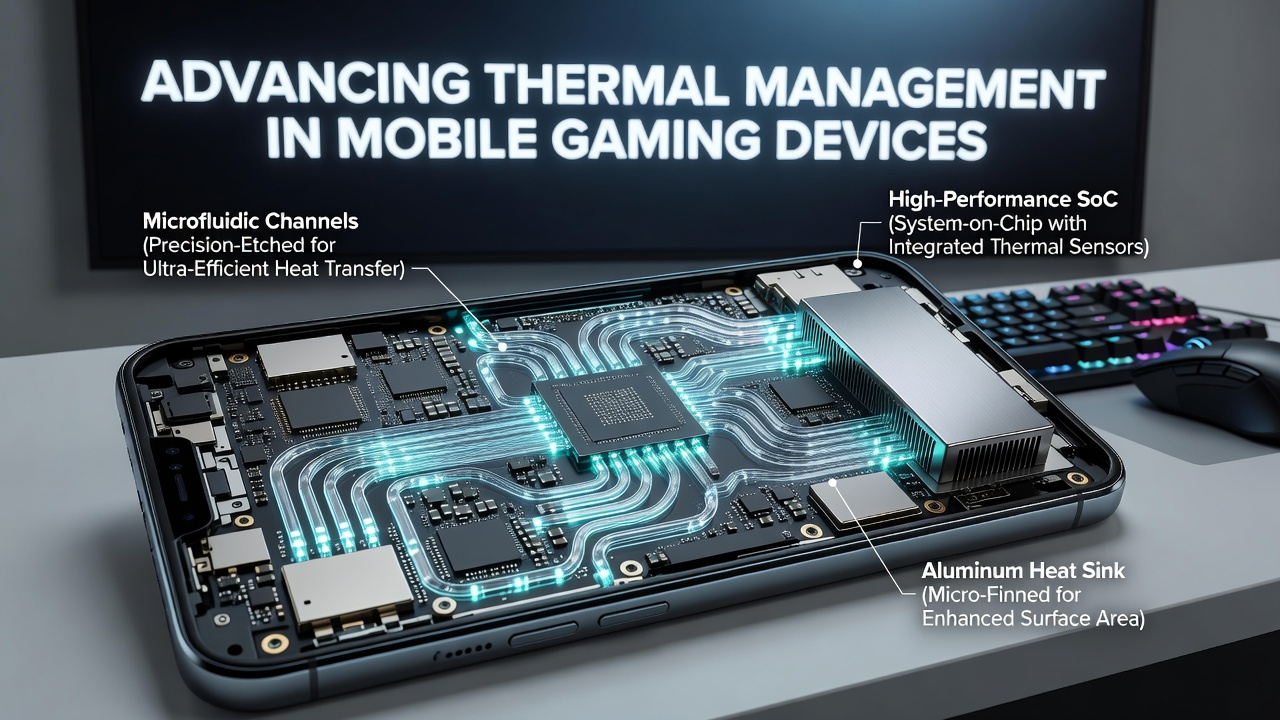
Engineers from the Singapore University of Technology and Design collaborated with hardware partners to collect telemetry across hundreds of devices, and the resulting datasets indicated that peak junction temperatures stayed below 70 degrees Celsius under sustained loads. Those measurements contrast with conventional designs that frequently approach 90 degrees Celsius, triggering automatic performance scaling to protect silicon.
Integration Challenges and Material Advances
Integrating microfluidic layers requires precise fabrication techniques such as photolithography and bonding of silicon or polymer substrates, and any misalignment can lead to leaks or blockages that compromise reliability. Material scientists have addressed these issues by developing corrosion-resistant coatings and self-sealing channel designs that maintain integrity across thousands of thermal cycles, while supply chain reports from 2025 onward show increasing adoption of these techniques in mass production lines.
Industry groups including the Mobile Gaming Hardware Consortium have published guidelines that standardize channel dimensions and coolant specifications, and compliance with these standards enables interoperability between different device models during large-scale tournaments. Observers note that regulatory bodies in the European Union have begun evaluating safety protocols for liquid-cooled consumer electronics, focusing on leak containment and fluid toxicity assessments.
Impact on Player Consistency in Qualification Matches
Competitors in extended qualifiers report fewer instances of unexpected frame drops or device shutdowns when using hardware fitted with microfluidic solutions, and tournament organizers have recorded higher completion rates for marathon-format events. Telemetry shared by participating teams shows that consistent thermal profiles correlate with steadier reaction times and fewer misinputs during late-stage rounds, although researchers emphasize that individual skill remains the dominant factor.
Academic papers published through the IEEE Transactions on Components, Packaging and Manufacturing Technology detail simulation models that predict fluid dynamics under varying ambient conditions, and these models help designers optimize channel layouts for different climates encountered at international qualifier venues.
Future Scaling and Broader Applications
Continued refinement of microfluidic architectures points toward even denser channel networks that could support next-generation mobile chipsets with higher transistor counts, and collaborative projects between universities in Australia and Canada are exploring additive manufacturing methods to produce customized cooling plates at lower cost. Data collected during the 2026 qualifier season provides a baseline for comparing subsequent generations of devices as adoption widens.
Conclusion
Microfluidic cooling systems have demonstrated measurable advantages in maintaining thermal stability within high-performance mobile gaming hardware during extended esports qualifiers, and ongoing research continues to refine fabrication methods and performance metrics. Figures released by participating research institutions and industry consortia document sustained operational consistency that supports longer competitive sessions without hardware-induced interruptions, and these developments align with broader trends in compact electronics thermal management.