7 Jul 2026
Phase-Change Cooling Solutions Mitigating Thermal Throttling During Extended Esports Training Regimens
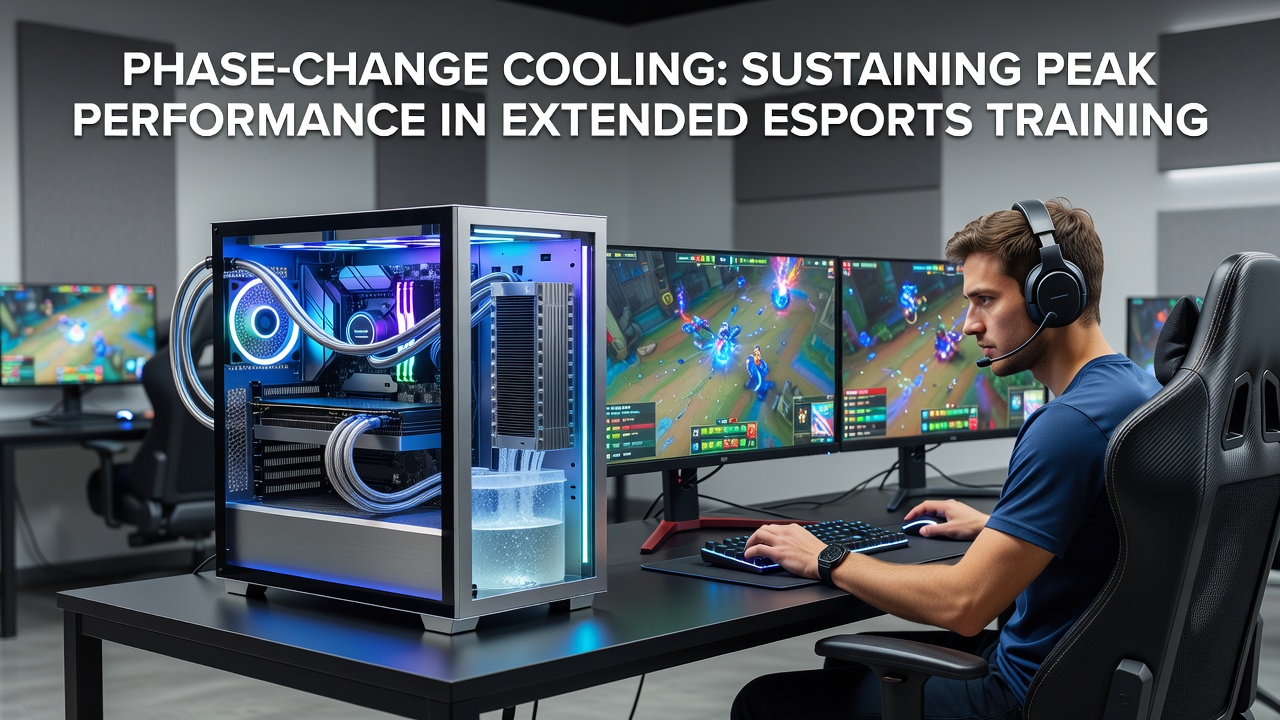
Esports competitors often face performance drops when processors reach critical temperatures during long practice blocks, and phase-change cooling materials address this issue by absorbing excess heat through solid-to-liquid transitions that maintain stable operating ranges. These materials, typically paraffin-based compounds or specialized alloys, activate at specific temperature thresholds around 40 to 60 degrees Celsius, pulling heat away from CPUs and GPUs without requiring constant fan speed increases that add noise and power draw.
Mechanics Behind Phase-Change Materials in Gaming Hardware
Engineers embed phase-change layers between heat spreaders and processor dies so that when workloads spike during extended drills, the material melts and stores thermal energy in its latent heat capacity. This process delays the onset of throttling, where chips automatically reduce clock speeds to avoid damage, allowing players to maintain consistent frame rates across multi-hour sessions that simulate tournament conditions. Research from institutions such as the National Institute of Standards and Technology shows how these compounds can handle repeated cycles without degradation, making them suitable for daily training regimens that run five to eight hours.
Hardware manufacturers integrate these solutions into both desktop rigs and portable laptops used by professional teams, combining them with vapor chambers or heat pipes that distribute the absorbed energy across larger surface areas. In July 2026 multiple regional leagues reported adoption rates climbing as teams upgraded equipment ahead of major qualifiers, with data indicating average session lengths extended by 25 percent before any measurable slowdown occurred.
Impact on Training Duration and Performance Consistency
Thermal throttling typically begins after 45 to 90 minutes of sustained high-load operation on standard air-cooled systems, yet phase-change augmented setups push that threshold past two hours in many tested configurations. Observers note that competitors using these systems complete more repetition cycles in aim trainers and strategy review software without the micro-stutters that interrupt muscle memory development. Figures from hardware validation labs reveal temperature plateaus remain flat even when ambient room conditions reach 28 degrees Celsius, a common environment in shared training facilities.
Case Examples from Professional Circuits
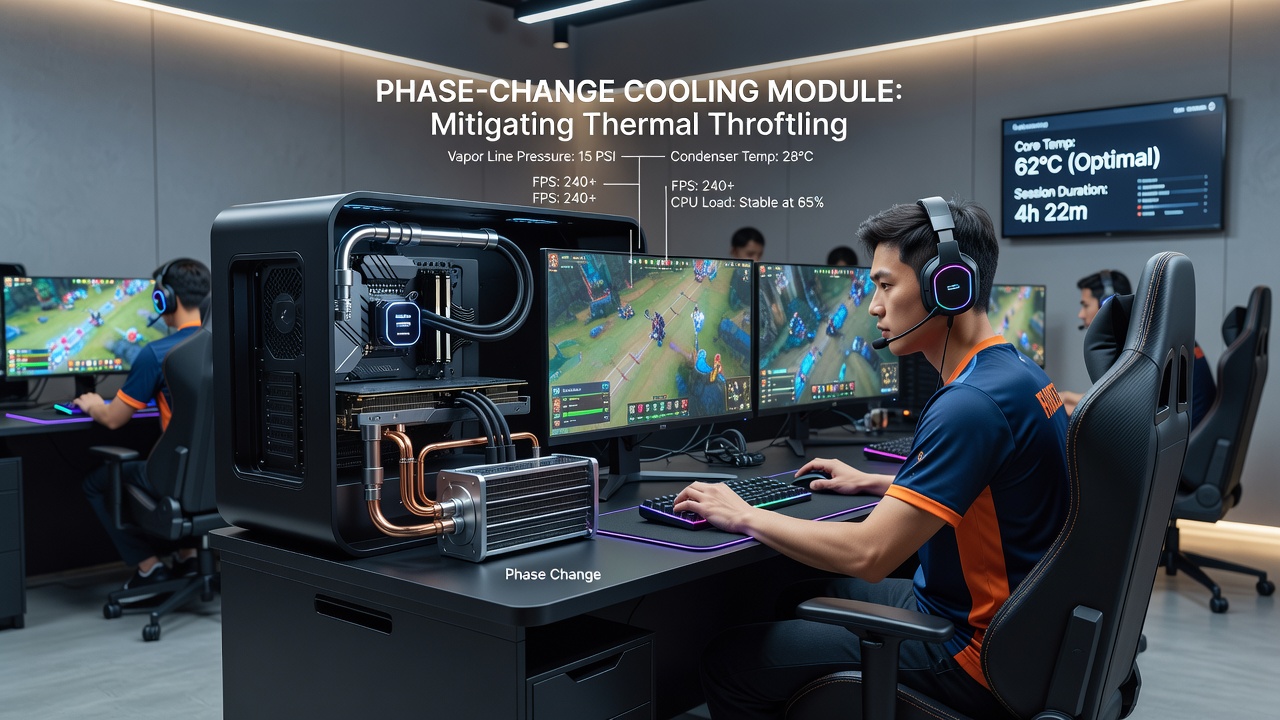
One European squad documented training logs where phase-change equipped machines sustained 240 frames per second in competitive titles throughout four-hour blocks, whereas previous hardware dropped to 180 frames after the first hour. Similar patterns appear in North American facilities where liquid metal interfaces pair with phase-change pads to create hybrid cooling stacks that handle both peak bursts and steady-state loads. These upgrades fit within existing chassis designs, avoiding the bulk associated with full liquid cooling loops that many portable esports setups cannot accommodate.
Integration With Existing Cooling Architectures
System builders combine phase-change elements with variable-speed fans that activate only after teh material reaches full saturation, reducing overall acoustic output during quiet practice periods. This layered approach proves especially useful for teams running multiple stations in close proximity, since lower fan noise supports voice communication without requiring headsets at maximum volume. Data collected across Asian training centers shows power consumption per station decreased by roughly 12 percent because fans operated at lower duty cycles once the phase-change buffer took over primary heat absorption duties.
Software monitoring tools now include thermal budgeting features that predict when phase-change materials will saturate based on workload profiles, giving coaches data to schedule breaks or rotate equipment before performance dips. These tools draw from real-time sensor readings rather than static thresholds, allowing regimens to adapt dynamically as players move between different game titles with varying processor demands.
Material Advances and Future Hardware Trends
Developers continue refining the melting points and thermal conductivities of phase-change compounds to match the specific heat profiles of newer processor generations. University labs in Australia have published findings on nano-enhanced variants that increase energy storage density by up to 30 percent compared with earlier formulations, extending the effective cooling window without increasing material volume. Such improvements align with the trend toward thinner laptop chassis that leave less space for traditional heatsinks yet still support high-wattage components during marathon training sessions.
Supply chains have stabilized around these materials since their initial introduction in consumer electronics several years ago, with multiple vendors now offering drop-in modules compatible with standard motherboard layouts. Teams evaluate cost-benefit ratios by measuring training output metrics such as accuracy retention and reaction time consistency across full days, finding that the incremental hardware expense offsets through reduced equipment downtime and fewer mid-session restarts.
Conclusion
Phase-change cooling has become a practical component in esports hardware ecosystems where extended training sessions demand steady thermal performance. The technology works by storing heat during critical load periods, delaying throttling events, and integrating cleanly with existing fan and heat pipe systems. As processor power densities continue rising, these materials provide a scalable path to maintain competitive consistency without shifting entirely to more complex cooling architectures.