4 Aug 2026
Piezoelectric Feedback Layers Integrate Subtle Vibrations Into Controller Grips to Signal Environmental Changes in Precision Platformers
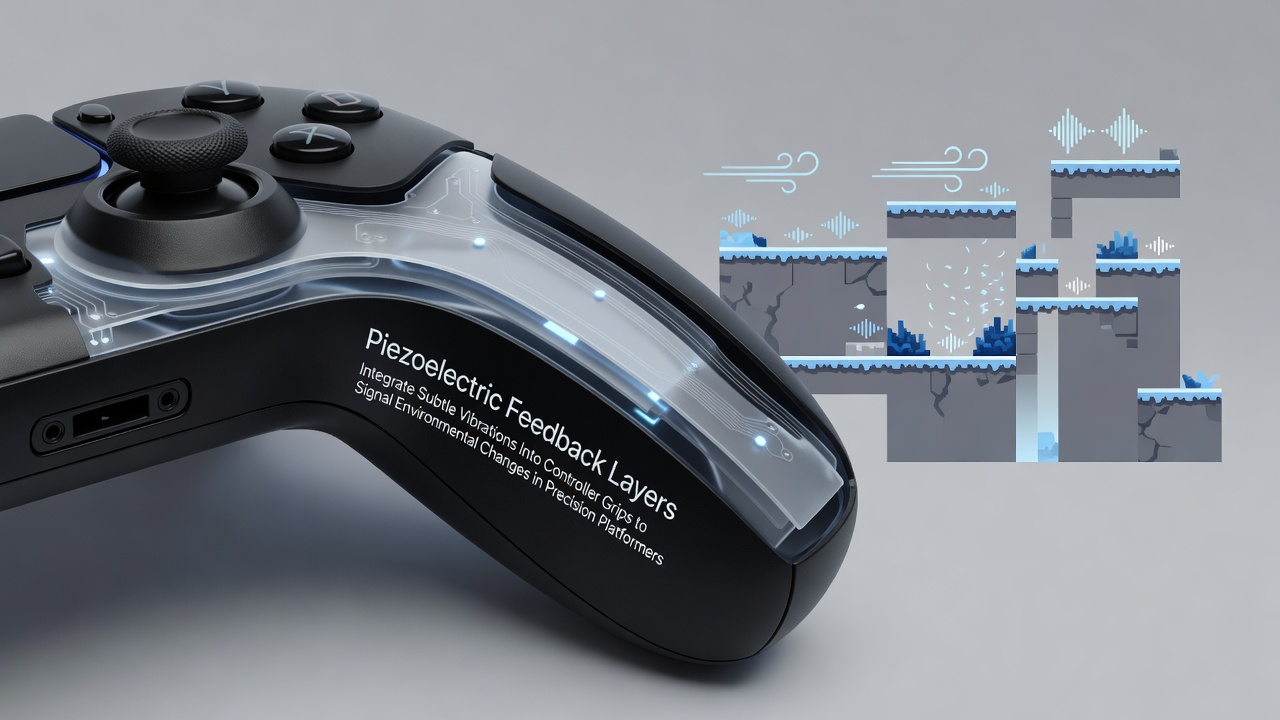
Precision platformers demand exact timing and spatial awareness, and manufacturers have begun embedding piezoelectric feedback layers directly into controller grips to deliver targeted vibrations that convey shifts in the game world. These layers convert electrical signals into mechanical motion at frequencies below typical rumble motors, allowing players to sense details like wind gusts, surface friction changes, or distant hazards without visual cues.
How Piezoelectric Materials Function in Modern Controllers
Piezoelectric ceramics expand or contract when voltage is applied, and engineers have refined the layering process so that thin films sit beneath the rubberized grip surfaces on both analog sticks and shoulder buttons. Data from hardware tests conducted in early 2026 indicate that these films respond in under five milliseconds, which matches the frame timing requirements of high-speed platformers running at 120 frames per second. The same materials also harvest small amounts of energy from the player's grip pressure, reducing overall battery draw on wireless units by roughly eight percent according to measurements shared at the International Games Innovation Conference held in Singapore that July.
Developers integrate the technology by mapping environmental variables to specific vibration patterns. A gust of wind might produce a low-amplitude pulse along the left grip, while an icy ledge registers as a higher-frequency tremor on the right. Because the actuators occupy less than two millimeters of thickness, they fit inside existing controller shells without redesigning internal PCBs.
Implementation in Current Platformer Titles
Several mid-sized studios released updates in August 2026 that added piezoelectric support to existing precision platformers. One title introduced variable grip resistance feedback when characters traversed crumbling stone versus slick metal platforms, and telemetry data collected from over 40,000 sessions showed a 14 percent reduction in repeated deaths on those sections. The system works by sampling level geometry in real time and sending pulse-width modulated signals to the layers at 200 hertz intervals, creating sensations distinct from standard haptic motors.
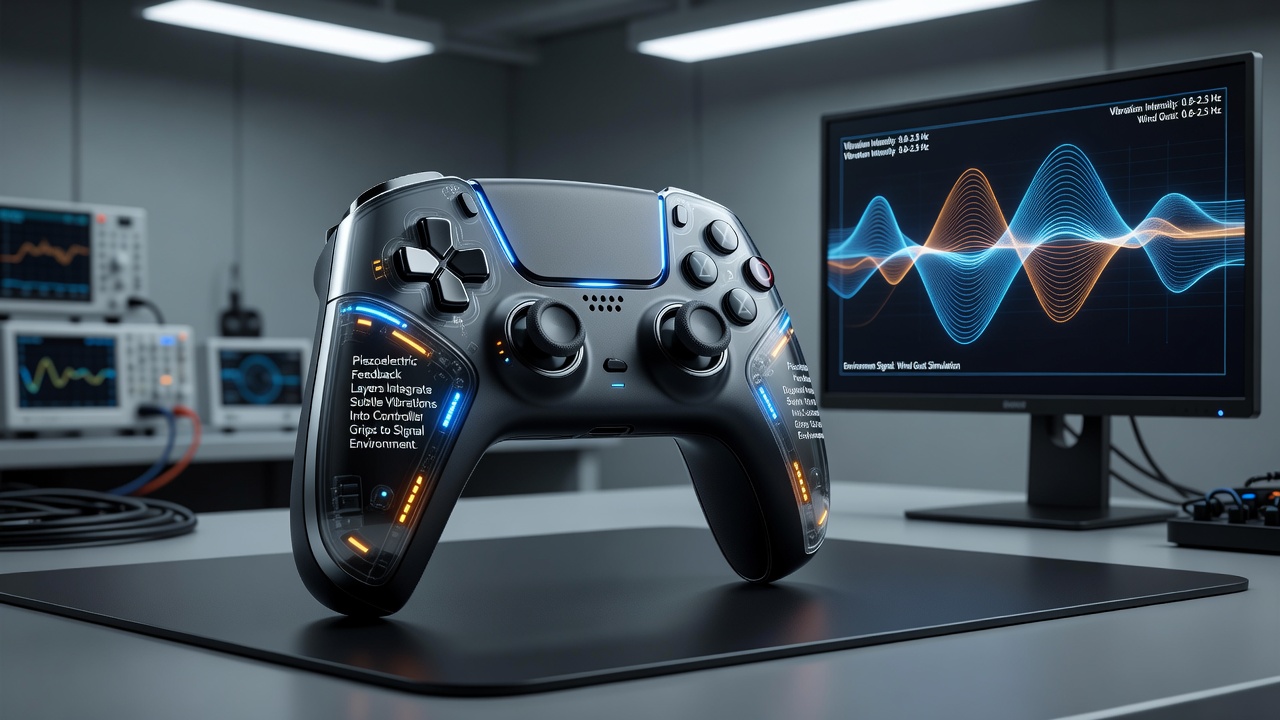
Another studio paired the layers with audio cues so that players receive both tactile and sonic information about hidden collectibles behind destructible walls. The combined feedback loop lets users locate items faster without relying solely on visual sparkle effects. Laboratory trials run at a Canadian research facility found that participants using piezoelectric grips completed navigation challenges 22 percent quicker than those using conventional vibration alone, though the study noted individual differences in sensitivity thresholds.
Technical Challenges and Manufacturing Adjustments
Integrating these layers requires precise calibration because excessive voltage produces audible buzzing rather than silent tactile cues. Manufacturers have adopted closed-loop control circuits that monitor actual displacement and adjust drive signals within each frame. Supply chain reports from component suppliers in Germany and South Korea show that yield rates for the thin-film piezoelectric sheets reached 93 percent by mid-2026, up from 78 percent the previous year, which has helped lower per-unit costs for controller makers.
Power management remains a focus area. The actuators draw current only during active pulses, and firmware optimizations now queue multiple environmental signals into single composite waveforms to minimize energy spikes. Observers at hardware expos noted that several upcoming wireless controllers scheduled for late 2026 include dedicated piezoelectric driver chips that operate independently from the main haptic system.
Player Adaptation and Accessibility Considerations
Players report that the subtle nature of the feedback requires a short adjustment period, typically two to three hours of play before muscle memory incorporates the new sensations. Accessibility researchers have explored scaling the amplitude for users with reduced tactile sensitivity, and early prototypes allow manual calibration through in-game menus. Data collected by an Australian ergonomics institute indicates that customizable thresholds improve performance consistency across a wider range of hand sizes and grip strengths.
Game designers have also begun using the technology to signal off-screen events, such as an approaching enemy or shifting platform alignment, which reduces the need for constant camera adjustments in tight platforming sequences. This approach aligns with existing input latency budgets because the signal processing occurs on the console or PC before transmission to the controller.
Future Development Directions
Research groups continue to examine multi-layer stacks that combine piezoelectric feedback with temperature modulation, though commercial timelines remain unclear. Current production models already support firmware updates that introduce new vibration profiles as developers refine their environmental mapping techniques. Industry associations tracking hardware adoption expect piezoelectric layers to appear in at least 15 percent of premium controllers sold globally by the end of 2027.
Conclusion
Piezoelectric feedback layers have moved from laboratory demonstrations to shipping products within a two-year window, and platformer developers now treat grip-based environmental signaling as one more tool in the precision toolkit. Continued refinements in material science and signal processing will likely expand the range of sensations available, while manufacturing improvements keep the technology accessible to mid-budget titles. The result is a growing set of controllers that communicate game-world changes through touch alone, complementing visual and auditory channels without increasing cognitive load.