23 Jun 2026
Piezoelectric Materials Transforming Vibration Feedback in Next Iteration Console Controllers
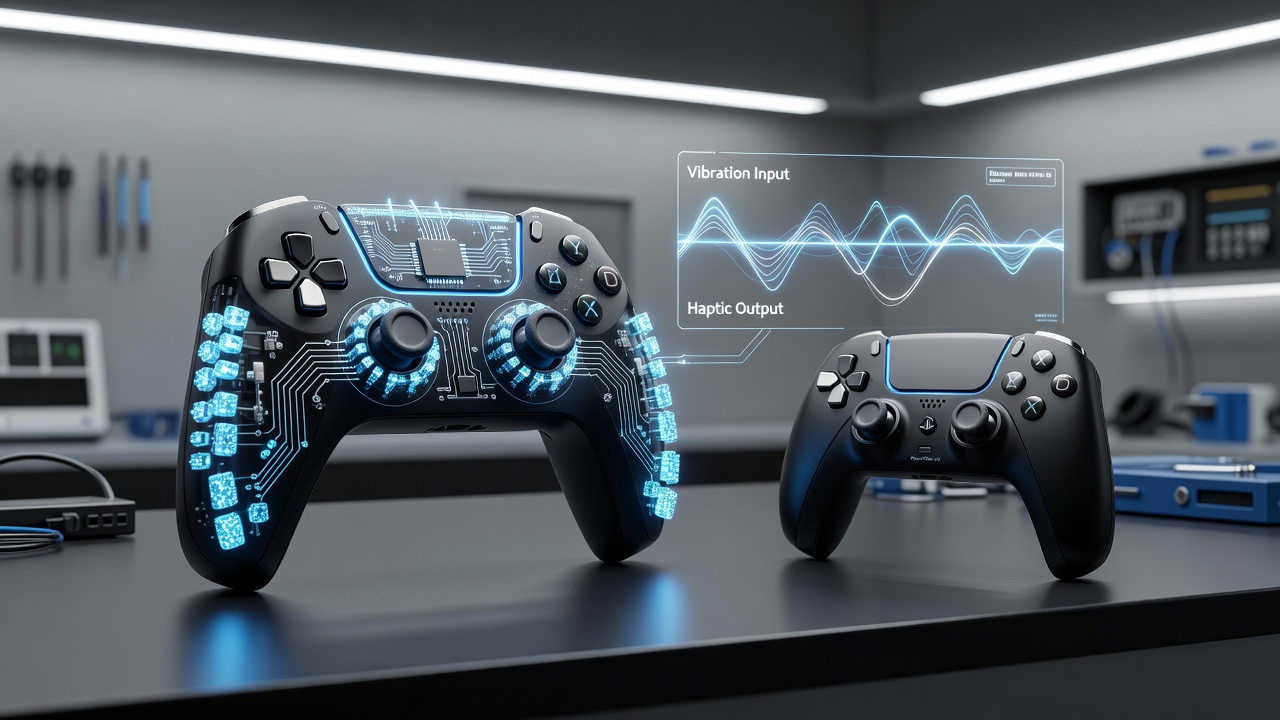 Piezoelectric materials generate electrical charge when subjected to mechanical stress and conversely produce mechanical deformation when voltage is applied, which creates the foundation for refined haptic systems in upcoming console controllers. Engineers at major hardware developers have integrated these crystals into controller designs to replace traditional eccentric rotating mass motors, and this shift allows for directional, frequency-specific vibrations that match in-game events with greater accuracy. Data from industry testing facilities shows response times dropping below five milliseconds in controlled environments, which enables players to distinguish between subtle surface textures and intense impact events through the same input device. Developers began exploring piezoelectric stacks for gaming peripherals after observing their established use in automotive sensors and medical imaging equipment. The materials, often composed of lead zirconate titanate or newer lead-free alternatives, expand or contract along specific axes when energized, and this property supports localized feedback zones across a controller's grips and triggers. Manufacturers report that power consumption for these actuators falls approximately thirty percent compared with legacy vibration motors, according to figures released by component suppliers in early 2026.
Technical Mechanisms Behind Enhanced Haptics
Inside next-generation controller housings, thin piezoelectric films sit beneath the outer shells and connect to custom driver circuits that modulate voltage waveforms in real time. When software sends a signal corresponding to footsteps on gravel, the films oscillate at frequencies between 50 and 300 hertz, while metallic impacts trigger shorter, higher-amplitude pulses. Researchers at technical universities in Japan and Germany have documented how stacking multiple layers increases force output without enlarging the overall footprint, and this approach fits within the ergonomic constraints of standard controller shells.
Calibration routines now incorporate machine learning models that adjust voltage thresholds based on individual grip pressure readings collected from embedded strain gauges. The process ensures consistent sensation delivery across different hand sizes and holding styles, while firmware updates pushed in June 2026 refined these algorithms for several major console platforms.
Industry Adoption Patterns Observed Through Mid-2026
Console manufacturers have filed multiple patents covering modular piezoelectric arrays that can be swapped during production to match regional regulatory requirements on material composition. Supply chain reports indicate increased orders for single-crystal variants sourced from facilities in South Korea and the United States, because these variants offer higher electromechanical coupling coefficients than polycrystalline forms. Trade association data compiled by the Entertainment Software Association reveals that haptic technology budgets for controller development rose by twenty-two percent year-over-year through the first half of 2026.
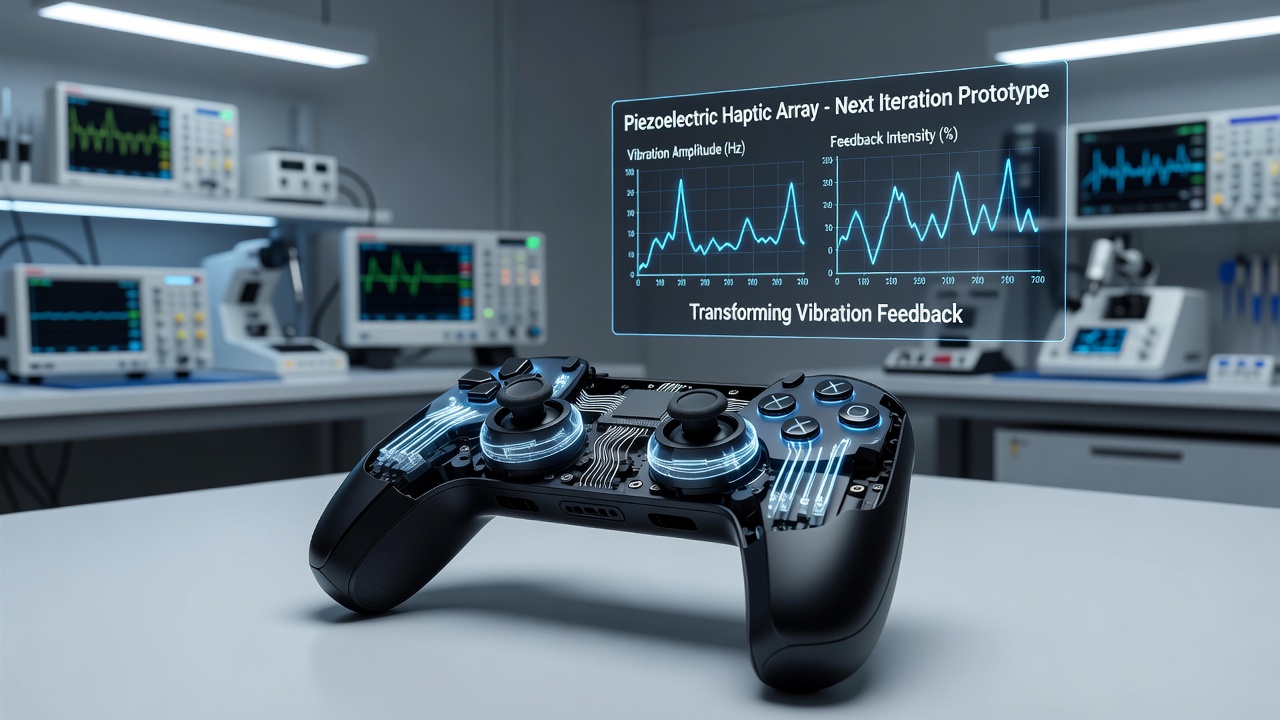
Independent testing labs have verified that piezoelectric modules maintain performance after repeated drop tests and temperature cycling between minus ten and sixty degrees Celsius, which satisfies durability standards required for mass-market distribution. One study conducted at a Canadian research institute examined player retention metrics in rhythm-action titles and noted measurable improvements in timing accuracy when participants used controllers equipped with the new actuators.
Integration Challenges and Engineering Solutions
Thermal management remains a consideration because repeated high-frequency actuation can generate localized heat within compact controller bodies. Designers addressed this by embedding micro heat spreaders made from graphite composites alongside the piezoelectric elements, and thermal imaging during extended play sessions confirmed surface temperatures stayed within safe operating ranges. Software developers also received updated SDKs that allow selective activation of feedback zones to minimize unnecessary power draw during idle periods.
Compatibility testing across wireless communication protocols shows no measurable increase in input latency when piezoelectric drivers operate concurrently with standard button and analog stick polling. Engineers achieved this by isolating the high-voltage drive circuits on separate power rails and employing optical isolation between control logic and actuator signals.
Future Development Pathways for Console Hardware
Material scientists continue to investigate lead-free compositions such as potassium sodium niobate to meet evolving environmental standards in the European Union and Australia. Prototypes using these alternatives have demonstrated comparable displacement characteristics while reducing reliance on restricted substances. Component suppliers anticipate broader availability of these formulations by late 2027, which could accelerate adoption in mid-range controller models.
Cross-industry collaboration between semiconductor firms and gaming hardware teams has produced compact high-voltage boost converters that fit within existing battery compartments. These converters enable full-range actuation from standard lithium-ion cells without requiring larger power packs, and early field trials indicate extended play sessions remain feasible under typical usage patterns.
Conclusion
Piezoelectric integration marks a measurable evolution in how console controllers convey tactile information, and ongoing refinements in material science and circuit design support continued progress. Production timelines announced by leading console makers point toward broader availability of these systems in hardware refreshes scheduled for 2027, while research institutions worldwide maintain active programs focused on improving efficiency and environmental compatibility. The combination of faster response, directional precision, and reduced power requirements positions piezoelectric actuators as a central element in upcoming controller architectures.