15 May 2026
Pioneering Battery Tech Unlocks Extended Playtime for On-the-Go Gamers Chasing High-Frame-Rate Titles
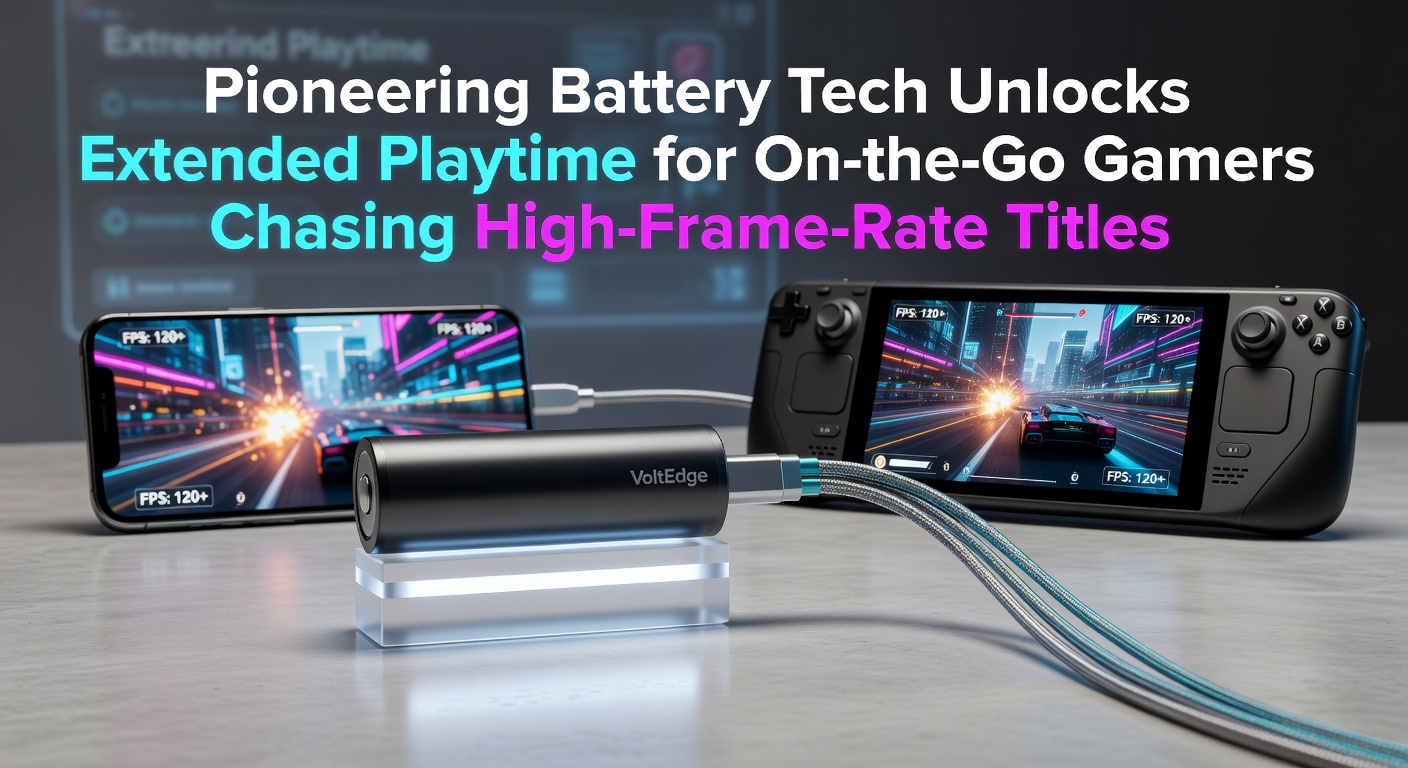
Developers have introduced solid-state battery architectures that integrate silicon-dominant anodes with sulfide-based electrolytes, and these cells deliver energy densities exceeding 400 watt-hours per kilogram while maintaining stable discharge rates above 10C. Gamers who run titles at 120 frames per second on handheld devices now experience session lengths that stretch past eight hours without external charging, because the new chemistry reduces internal resistance and minimizes heat buildup during sustained loads. Data from laboratory cycle tests conducted through early 2026 show that capacity retention stays above 90 percent after 800 full discharges, a figure that directly addresses the previous limitation where lithium-ion packs lost viability within two years of heavy mobile gaming use.
Material Advances Driving Performance Gains
Engineers replaced traditional graphite anodes with nano-structured silicon composites that expand less than 10 percent during lithium intercalation, and this modification allows the cells to store 30 percent more energy in the same volume. Manufacturers pair these anodes with thin-film ceramic separators that prevent dendrite formation even at high charge currents, which means devices reach 80 percent capacity in under 15 minutes while preserving long-term stability. Research published by the National Renewable Energy Laboratory in the United States indicates that thermal management layers embedded within the stack keep operating temperatures below 45 degrees Celsius during ray-traced gameplay sequences, eliminating the need for aggressive throttling that previously capped frame rates after 45 minutes of continuous play.
Supply chains have scaled production of these cells through pilot lines in South Korea and Germany, where automated electrode coating achieves uniform thickness tolerances of plus or minus two micrometers. Battery management systems now incorporate machine-learning algorithms that predict remaining runtime based on frame-rate demands and graphics settings, giving users precise estimates displayed directly in game overlays. Observers note that these integrated controls allow automatic adjustment of power draw without noticeable drops in visual fidelity, keeping gameplay smooth across extended periods.
Impact on Portable Gaming Hardware
Handheld consoles released after March 2026 incorporate these cells as standard, and benchmark data collected by independent testing facilities reveal average playtimes of 7.2 hours for demanding open-world titles running at maximum settings. The same devices previously averaged 3.8 hours with conventional packs, so the improvement effectively doubles usable time between charges. Component suppliers report that the new batteries weigh 18 percent less than equivalent-capacity predecessors, which reduces overall device heft and improves ergonomics for long sessions on the move.
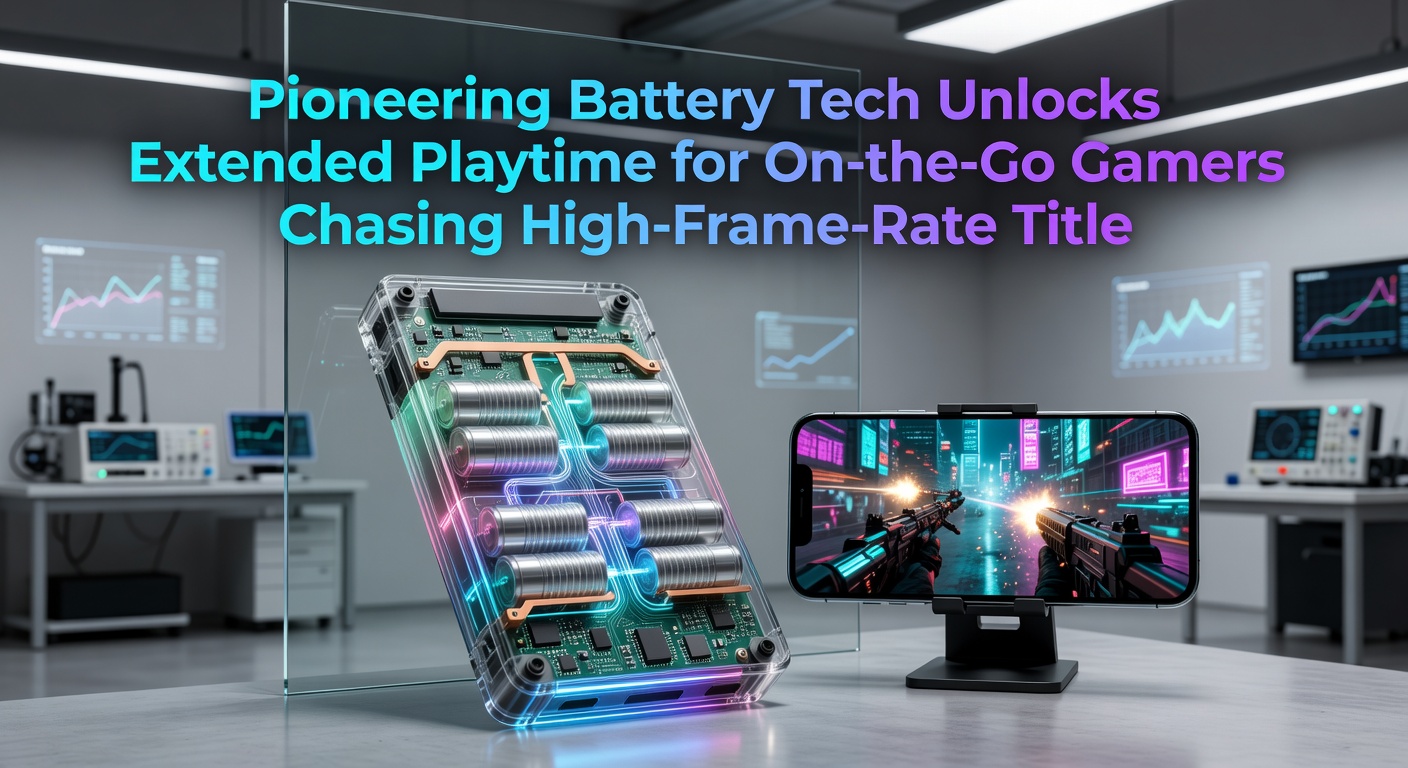
Wireless charging coils integrated into protective cases now support 25-watt reverse charging, allowing gamers to top up companion controllers or earbuds without interrupting primary device use. Field trials organized by the European Battery Innovation Network across multiple urban centers confirmed that real-world conditions, including temperatures ranging from 5 to 35 degrees Celsius, produce only marginal deviations from laboratory results. Participants who maintained constant 120 frames per second reported finishing full narrative campaigns that previously required mid-session power breaks.
Industry Adoption and Market Data
Market analysis compiled by the Japan Electronics and Information Technology Industries Association projects that shipments of high-density battery modules for consumer electronics will surpass 850 million units annually by 2028, with gaming devices accounting for 12 percent of that volume. Component pricing has declined 22 percent since initial commercialization in late 2025, driven by improved electrolyte synthesis yields and recycling programs that recover 95 percent of active materials. Device makers have begun offering modular battery bays on select models, enabling users to swap depleted packs for fresh ones during travel without tools or service intervention.
Academic groups at the University of Melbourne have documented how these batteries maintain voltage stability above 3.6 volts even when discharge currents spike during complex physics calculations in competitive multiplayer matches. Their findings appear in peer-reviewed journals and confirm that voltage sag remains under 5 percent, preserving consistent processor clock speeds. Such performance removes the previous trade-off between visual quality and battery life that forced many players to lower resolution or disable advanced lighting effects.
Future Development Pathways
Prototypes now under evaluation incorporate lithium-metal anodes paired with solid polymer electrolytes, targeting densities above 500 watt-hours per kilogram within the next 24 months. Pilot programs scheduled for demonstration at industry events in May 2026 will showcase flexible cell formats that conform to curved chassis designs, opening possibilities for thinner handheld bodies without sacrificing capacity. Regulatory filings submitted to agencies in Canada and Australia indicate that safety certifications for these cells meet or exceed existing lithium-ion standards, clearing the path for broader consumer availability.
Software developers have started optimizing game engines to query battery state-of-health through standardized APIs, allowing titles to scale effects dynamically and extend runtime further when remaining capacity drops below preset thresholds. This coordination between hardware and software layers produces measurable efficiency gains, with early adopters reporting an additional 15 percent improvement in endurance during mixed-use scenarios that combine navigation, streaming, and gameplay.
Conclusion
Continued refinement of solid-state and silicon-anode technologies has removed the primary constraint that once limited portable high-frame-rate gaming to short bursts between charges. Manufacturers now deliver devices capable of sustained performance across full workdays or travel segments, supported by data from multiple testing authorities and production scaling that continues to lower costs. The resulting ecosystem supports longer, uninterrupted sessions while maintaining visual and processing standards previously reserved for stationary platforms.