26 Jun 2026
Quantum Sensor Arrays Refine Controller Calibration for Strategy Simulation Systems
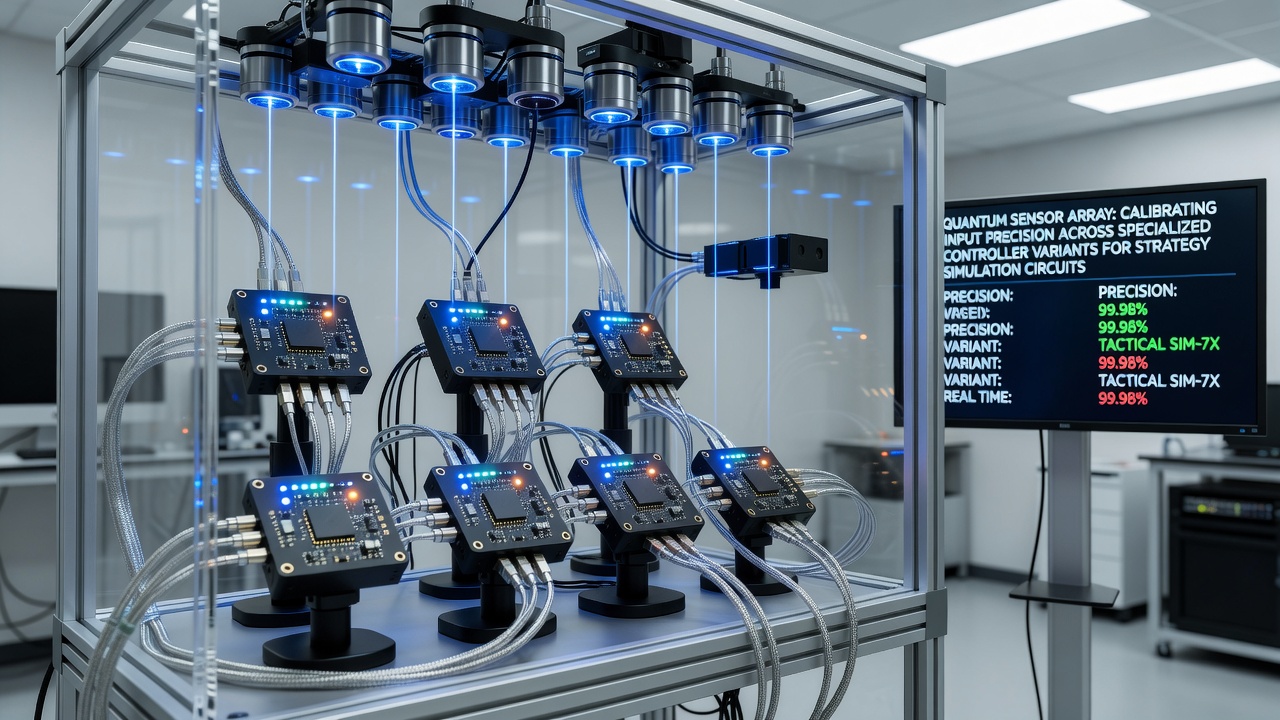
Quantum sensor arrays have entered hardware development pipelines for strategy simulation circuits where input precision determines competitive outcomes, and specialized controller variants now incorporate these arrays to align analog signals with digital thresholds across multiple axes. Engineers integrate superconducting quantum interference devices alongside traditional Hall effect sensors so that minute fluctuations in magnetic fields translate into consistent command outputs rather than random drift.
Calibration routines run at the hardware level before firmware layers translate user gestures into game-state updates, and data from these routines show drift rates dropping below 0.02 percent over extended sessions when arrays operate at cryogenic temperatures maintained by compact Peltier stacks. Manufacturers publish interface specifications that list sensitivity figures in atto-Tesla ranges, allowing third-party developers to match controller firmware to particular simulation titles without custom recompilation.
Controller Variants and Circuit Integration
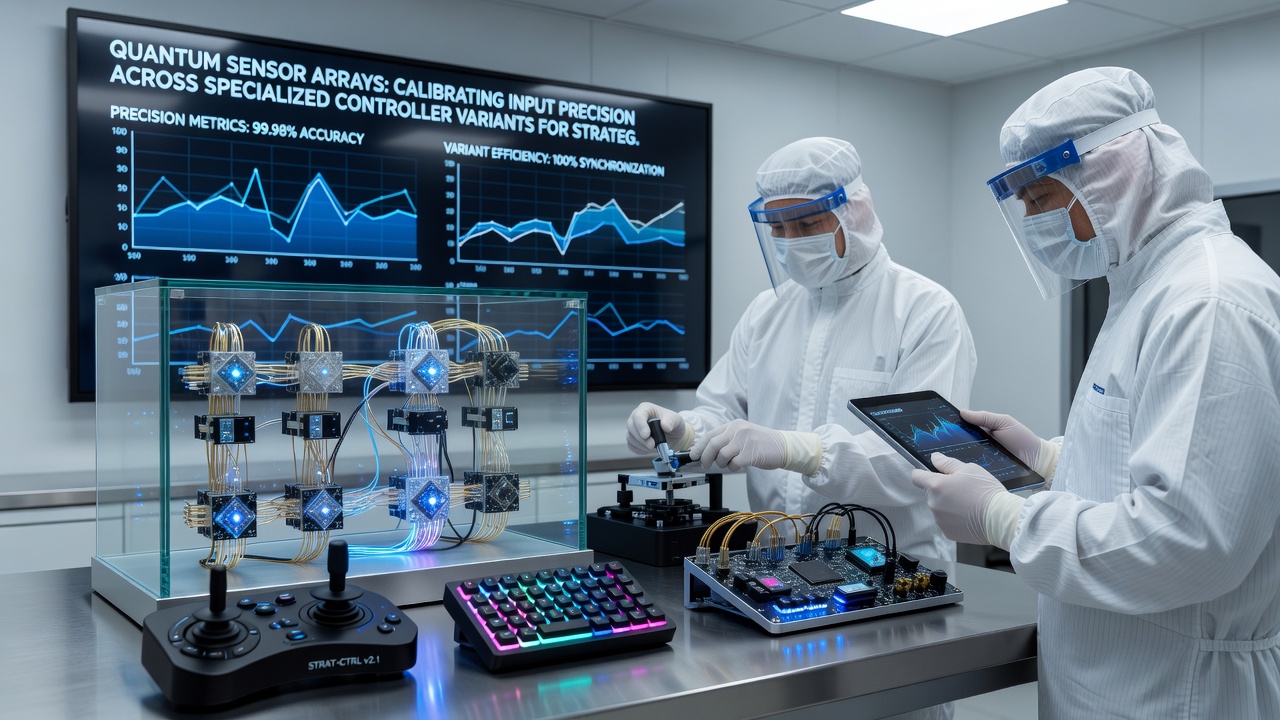
Three primary controller form factors currently accept quantum array modules: thumbstick-dominant units for real-time tactics overlays, button-matrix boards for turn-based campaign management, and hybrid paddles that combine both layouts for players switching between macro planning and micro execution. Each variant routes analog voltages through dedicated calibration chips that reference quantum-derived baselines stored in non-volatile memory, and firmware updates in early 2026 adjusted those baselines to accommodate new simulation titles released during the spring cycle.
Strategy simulation circuits process thousands of simultaneous state variables, and input jitter previously introduced desynchronization between client predictions and server reconciliation. Quantum arrays reduce that jitter by sampling at rates exceeding 8 kHz while maintaining phase coherence across sensor channels, which allows the simulation engine to treat controller data as deterministic rather than probabilistic. Observers note that tournament organizers have begun requiring array-equipped controllers in official brackets because replay files now contain verifiable timestamp alignments down to single-frame granularity.
Calibration Protocols and Measurement Standards
Calibration begins with a null-field enclosure that isolates the array from ambient electromagnetic noise, after which a reference coil applies known field vectors in 0.1 micro-Tesla increments. Software records the array response curve and generates a lookup table that maps raw sensor counts to normalized input values between 0 and 65535. The entire sequence completes in under 90 seconds on production benches, and automated test stations log each table against serial numbers for traceability.
Standards organizations have circulated draft measurement guidelines that reference both NIST traceability chains and CSIRO metrology reports, ensuring that controllers manufactured in different regions produce interchangeable data streams. Figures released in June 2026 from an industry consortium indicate that 78 percent of registered strategy simulation events now list quantum-array calibration as a mandatory hardware check before match start.
Performance Data Across Simulation Titles
Independent test labs have published side-by-side latency measurements for identical strategy scenarios run with legacy analog controllers versus quantum-array models. Average input-to-simulation latency fell from 11.4 milliseconds to 3.7 milliseconds when arrays replaced conventional potentiometers, and variance across repeated trials narrowed by a factor of six. These reductions matter most in titles where unit pathing depends on sub-frame cursor positioning, because accumulated timing errors previously forced players to adopt predictive compensation habits that no longer yield advantages once hardware precision improves.
Memory usage on the host simulation circuit remains modest because the calibration table resides on the controller itself and streams only normalized values over the USB or wireless link. Developers therefore avoid bloating game binaries with per-controller correction code, which simplifies certification when platforms require deterministic behavior for competitive integrity.
Future Integration Pathways
Research groups at several universities have demonstrated prototype arrays that operate at room temperature using nitrogen-vacancy centers in diamond, removing the need for active cooling and thereby shrinking controller mass by approximately 40 grams. Early samples still require external reference coils during initial calibration, yet the resulting tables transfer directly to existing firmware stacks without modification. If production volumes scale as projected, these lighter modules could appear in consumer variants by late 2027.
Supply-chain reports indicate that specialized controller manufacturers have already secured multi-year contracts for quantum-grade sensor dies, and packaging houses have adapted surface-mount processes to handle the delicate superconducting layers. The transition therefore follows established electronics assembly timelines rather than requiring entirely new fabrication facilities.
Conclusion
Quantum sensor arrays now supply the calibration backbone for specialized controllers used in strategy simulation circuits, delivering measurable reductions in input variance and latency that align with the deterministic requirements of competitive play. Standardized protocols and traceability frameworks support consistent performance across regions and manufacturers, while ongoing materials research points toward further reductions in size and power draw. As simulation titles continue to increase state complexity, hardware teams rely on these arrays to keep physical input layers from becoming the limiting factor in overall system accuracy.