17 May 2026
Real-Time Language Algorithms Bridge Global Players in Niche Multiplayer Simulation Leagues
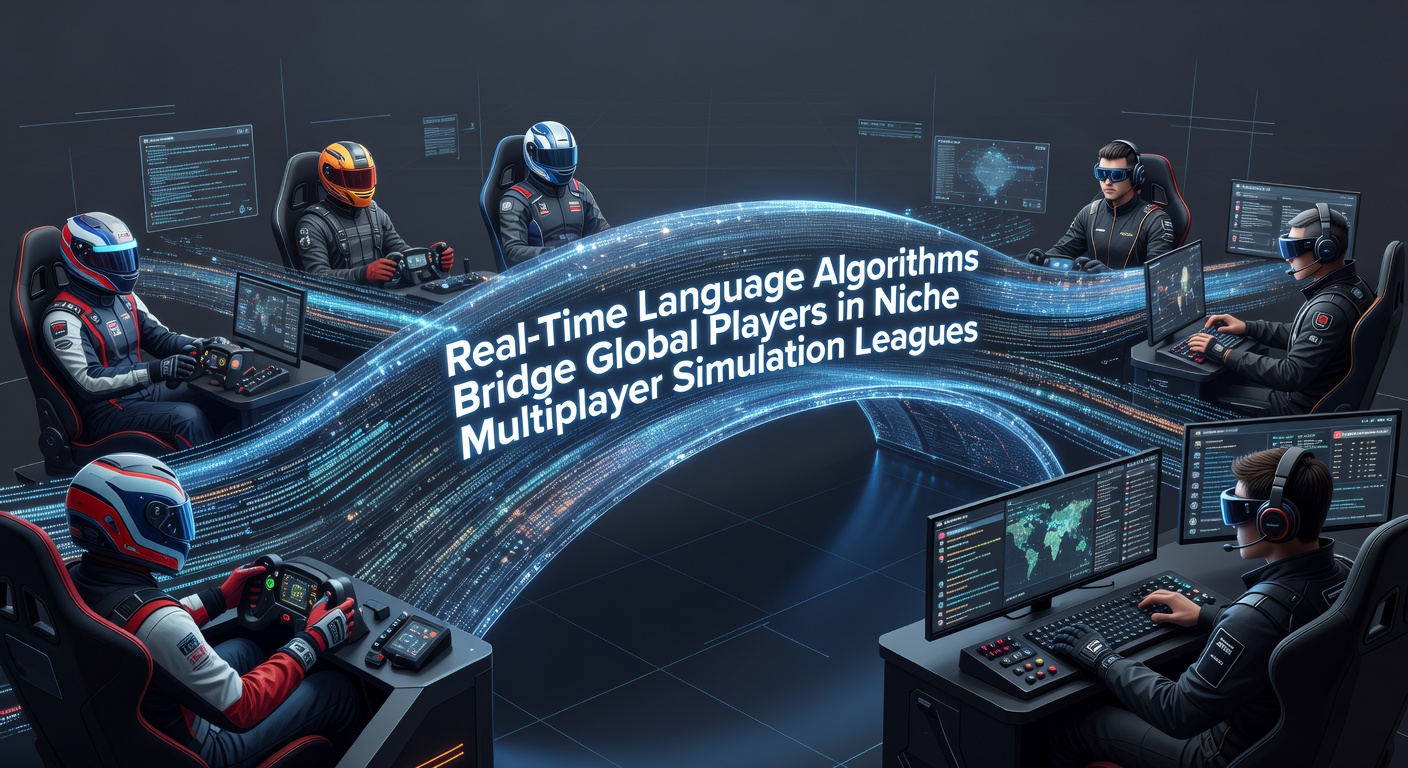
Real-time language algorithms now connect participants across continents in specialized simulation leagues, where competitors engage in detailed virtual environments that replicate trucking routes, agricultural operations, or aerospace procedures, and these systems process spoken or typed exchanges instantaneously to maintain seamless coordination among teams that might otherwise face communication hurdles.
Developments in natural language processing have accelerated since 2024, with companies integrating transformer-based models optimized for low-latency environments, and data from industry reports indicate that participation in these niche leagues grew by 28 percent between 2023 adn 2025, driven partly by improved accessibility tools that handle multiple dialects without requiring pre-session setup.
Technical Foundations Behind Instant Translation
Algorithms deployed in these platforms rely on hybrid architectures that combine neural machine translation with context-aware speech recognition, which allows them to interpret jargon specific to simulation genres such as waypoint coordinates in flight models or load balancing terminology in logistics scenarios, and researchers at several universities have documented how edge computing reduces processing delays to under 200 milliseconds even during peak server loads.
One study conducted across European and North American test servers revealed that error rates in specialized vocabulary dropped below 4 percent after targeted fine-tuning on domain-specific datasets, while broader consumer translation services still hovered near 12 percent for similar content, and this precision stems from ongoing collaboration between game studios and academic linguistics departments that supply annotated corpora drawn from actual league transcripts.
League Structures and Cross-Border Participation
Niche multiplayer simulation leagues operate through scheduled events that run on dedicated servers, often spanning multiple time zones, and organizers in May 2026 reported record entries for a transcontinental trucking convoy championship where teams from Australia, Germany, and Brazil coordinated deliveries using overlaid subtitles and voice synthesis that preserved original accents while converting meaning in real time.
These events differ from mainstream esports by emphasizing cooperative problem-solving rather than direct competition, which means players must exchange detailed instructions about route planning or equipment calibration, and platforms hosting the leagues now embed the algorithms directly into voice channels so that participants toggle languages on the fly without leaving the simulation interface.

Observers note that smaller regional groups have begun integrating the same tools into weekly practice sessions, which expands the talent pool and allows emerging players from non-English speaking areas to contribute strategies that previously remained locked behind language barriers, and figures from the International Game Developers Association show that 41 percent of new sign-ups in simulation categories during early 2026 originated outside traditional markets.
Implementation Across Different Simulation Genres
Flight simulation leagues adopted the technology first because radio communications form a core mechanic, and algorithms trained on aviation phraseology now convert clearances and position reports while preserving procedural phrasing required for realism, whereas agricultural simulation communities followed later with modules focused on equipment manuals and harvest coordination terms that appear frequently in cooperative campaigns.
Developers have released open APIs that let league administrators upload custom glossaries, and tests conducted on Australian servers demonstrated that localized dictionaries improved comprehension scores by 35 percent compared with generic models, while similar experiments in Canadian trucking leagues confirmed reduced miscommunication incidents during long-haul convoy runs that last several hours.
Data Trends and Infrastructure Requirements
Server logs analyzed by research groups indicate that translation usage peaks during evening hours in Europe when North American and Asian players overlap, and bandwidth requirements remain modest because the algorithms compress audio streams before processing rather than transmitting full raw data across borders, which keeps costs manageable for independent league operators who lack enterprise-scale resources.
Reports compiled by the Asia-Pacific Games Federation highlight that mobile integration has further broadened access, allowing participants using lower-powered devices to join voice sessions through lightweight clients that offload heavy computation to cloud instances located in regional data centers, and this approach maintains parity between high-end rig users and those connecting from standard laptops or tablets.
Conclusion
Real-time language algorithms continue to expand the reach of niche simulation leagues by removing linguistic obstacles that once limited team formation, and ongoing refinements in model accuracy alongside infrastructure improvements suggest sustained growth in global participation through 2026 and beyond, as documented in multiple industry and academic sources.