21 Jun 2026
Spectrographic Feedback Mechanisms Guiding Dynamic Lighting Adjustments in Immersive Simulation Environments
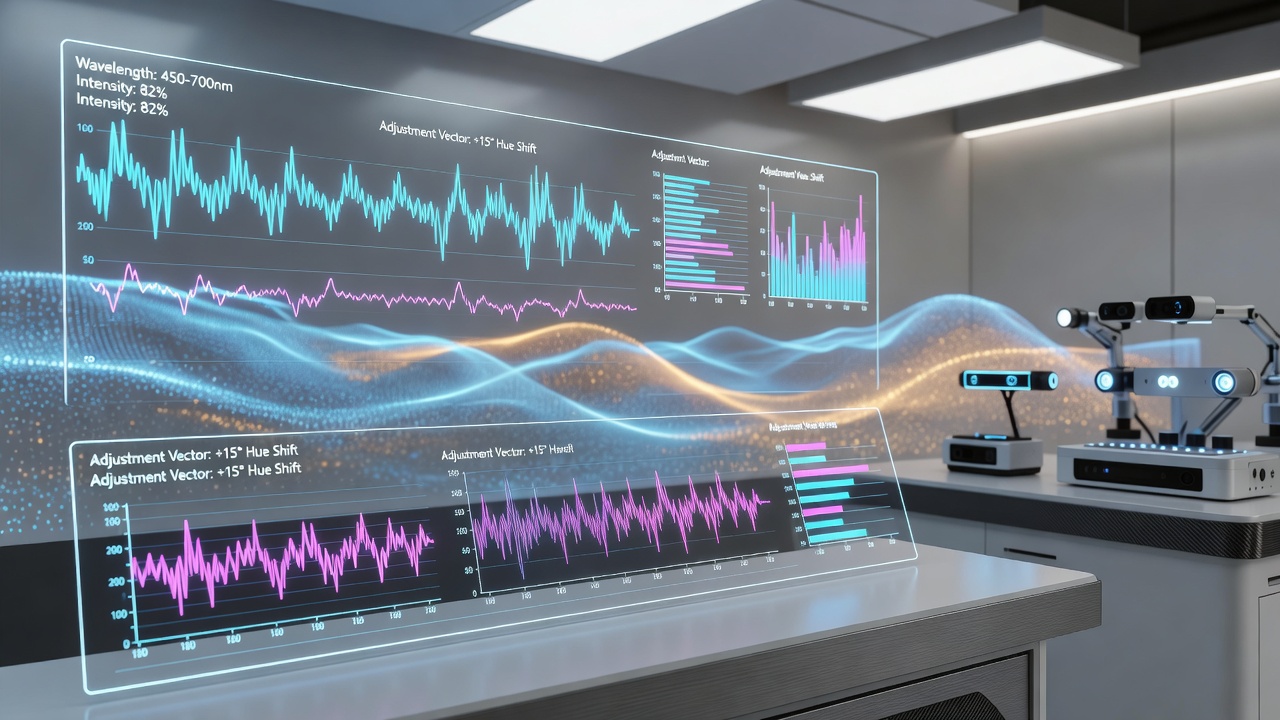
Researchers have developed spectrographic feedback systems that monitor light wavelengths in real time and direct adjustments to illumination sources within virtual environments, and these mechanisms rely on spectral data collection from sensors embedded in headsets or room-scale setups. Data indicates that such systems process incoming light across visible and near-infrared ranges to match environmental conditions with user position and activity patterns, while industry reports from the Australian Research Council highlight deployments in simulation facilities since early 2025.
Core Components of Spectrographic Analysis
Spectrometers capture detailed breakdowns of light composition at frequencies up to 1000 samples per second, and this information feeds into control algorithms that recalibrate LED arrays or projection systems accordingly. Engineers integrate these tools with existing rendering pipelines so that shifts in ambient spectra trigger immediate responses, such as boosting blue wavelengths during simulated daylight transitions or reducing red components in low-visibility scenarios. Studies from the University of Tokyo's Human Interface Lab show that latency remains below 8 milliseconds in controlled tests conducted through mid-2025.
Calibration routines account for user-specific factors like eye movement and head orientation, and multiple sensor fusion points combine spectral readings with positional tracking data to maintain consistency across large-scale environments. Observers note that calibration often occurs during initial user entry phases, which prevents drift over extended sessions lasting several hours.
Integration in Immersive Training and Entertainment Platforms
Simulation operators in aerospace and medical fields apply these mechanisms to replicate variable lighting conditions that affect decision-making accuracy, and one documented case involved flight training modules where spectral adjustments improved pilot response times during night operations by aligning virtual cockpit illumination with recorded flight data. In June 2026 updates presented at an EU-funded Horizon conference in Brussels, developers demonstrated scaled versions for multiplayer scenarios where individual user spectra receive independent treatment without cross-interference.
Entertainment applications extend to location-based VR centers that use room-scale projectors, and these setups adjust output based on collective audience light absorption patterns detected through overhead arrays. Figures from the IEEE Standards Association reveal adoption rates among mid-sized facilities increased by 22 percent between 2024 and 2026, driven by hardware cost reductions in miniaturized spectrometers.
Technical Implementation Details
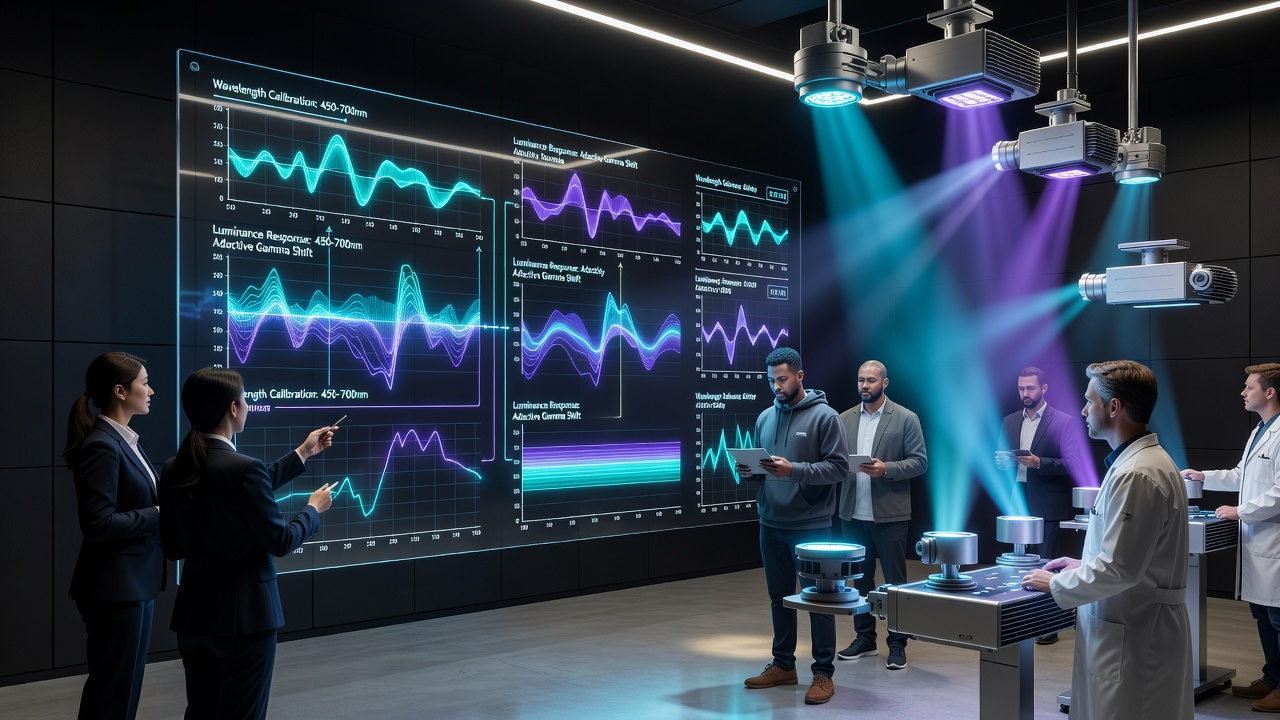
Feedback loops operate through closed-circuit processing where spectral deviations trigger proportional changes in light intensity and hue, and algorithms employ Fourier transforms to isolate dominant wavelengths before mapping them to output corrections. Hardware typically includes compact grating-based sensors paired with graphics processing units optimized for parallel spectral computation, which allows simultaneous handling of up to 16 concurrent users in shared spaces.
Software frameworks from companies specializing in simulation engines incorporate modular plugins for these functions, and integration occurs at the shader level so lighting models receive direct spectral inputs rather than relying on manual artist adjustments. Research indicates that power consumption rises modestly by 12 to 15 percent compared to static systems, yet overall efficiency improves because unnecessary light output decreases during low-activity periods.
Performance Metrics and Validation Studies
Validation trials conducted by Canadian National Research Council teams in 2025 measured user immersion scores through standardized questionnaires and physiological monitoring, and results showed consistent gains in presence ratings when spectrographic controls remained active versus baseline fixed lighting. Error rates in color-critical tasks dropped by measurable margins, according to aggregated datasets shared across participating labs.
Edge cases such as rapid movement or external light leaks receive handling through predictive buffering, and systems preemptively stabilize output using historical spectral trends collected during prior sessions. Those who've implemented the technology report fewer instances of visual fatigue after prolonged exposure, though quantitative long-term studies continue to accumulate data into 2026.
Future Directions in Spectral Control Systems
Expansion efforts focus on incorporating ultraviolet and thermal spectra for specialized simulations involving heat signatures or material analysis, and partnerships between hardware manufacturers and academic groups aim to standardize data formats for broader interoperability. Current roadmaps include support for wireless sensor networks that eliminate cable constraints in mobile setups, with prototype demonstrations scheduled for later quarters of 2026.
Conclusion
Spectrographic feedback continues to evolve as a foundational element in dynamic lighting for immersive simulations, and ongoing refinements in sensor resolution alongside algorithm efficiency support wider deployment across training, research, and entertainment sectors. Evidence from multiple international sources confirms measurable impacts on system responsiveness and user interaction quality, while development trajectories point toward further integration with emerging display technologies in the years ahead.