29 May 2026
The Unexpected Role of 3D Printing in Customizing Esports Peripherals for Professional Athletes
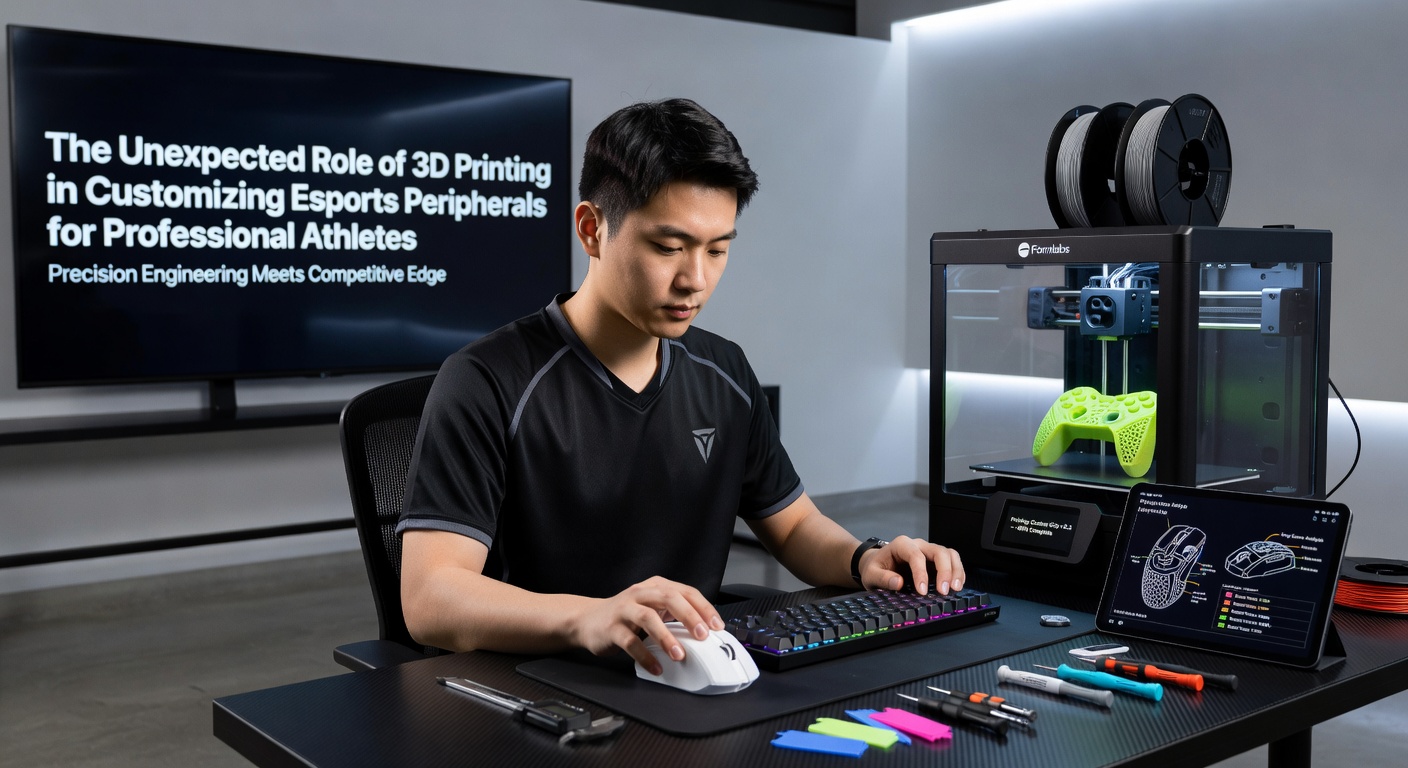
Esports competitions demand precision from athletes who spend hours refining their setups, and 3D printing now supplies teams with tools to produce tailored components that match individual biomechanics. Researchers at institutions across North America and Europe have documented how additive manufacturing creates grips, keycaps, and mounts that reduce strain while improving response times during extended matches.
Teams integrate fused deposition modeling and resin-based systems to fabricate prototypes within hours rather than weeks. Data from equipment suppliers shows that professional organizations began adopting these methods around 2022, with adoption rates climbing steadily as material options expanded to include flexible thermoplastics and lightweight composites. Athletes receive peripherals adjusted to palm width, finger length, and grip pressure patterns captured through 3D scanning sessions conducted before major tournaments.
Applications in Mice and Controllers
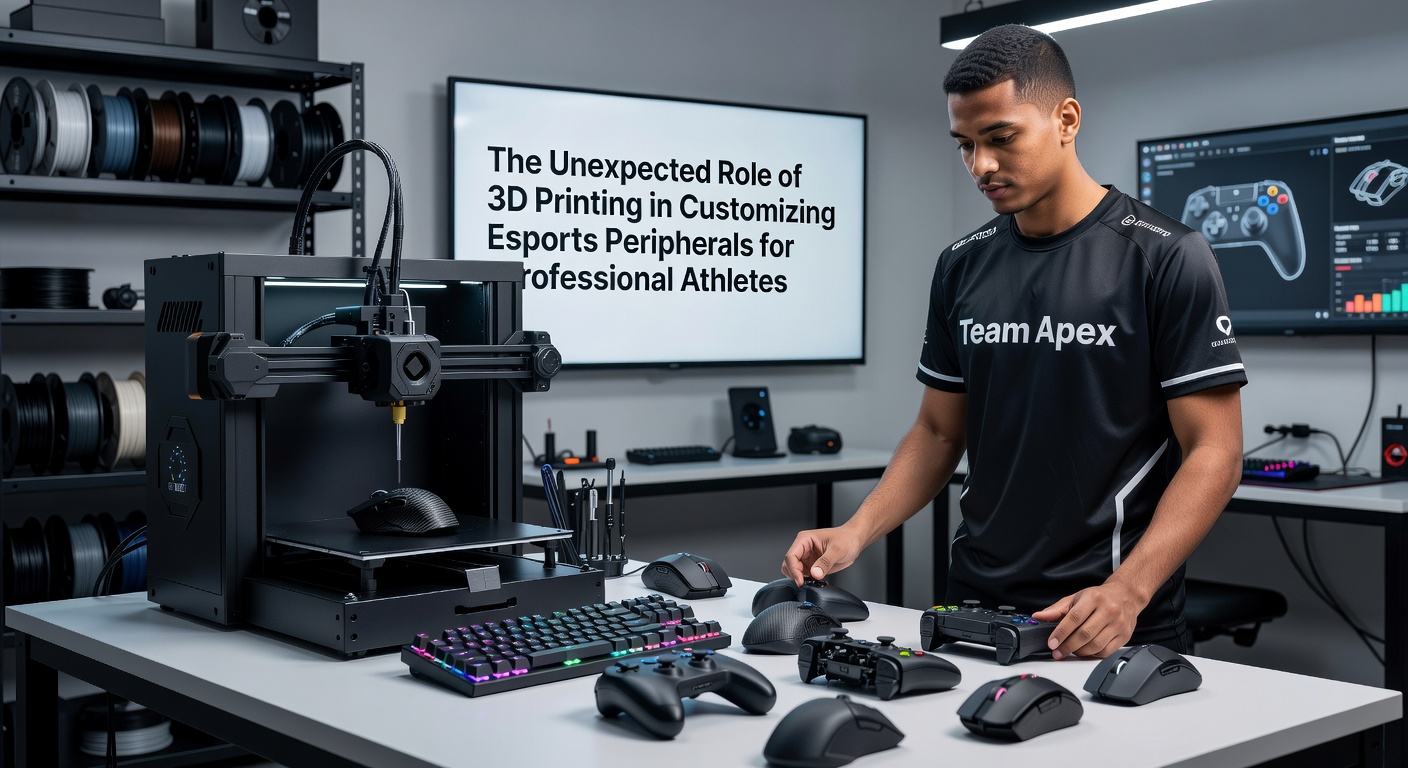
Custom mouse shells represent one of the most visible uses, where players request modifications that alter button placement or add textured surfaces for better control during rapid movements. A study conducted by the University of Waterloo examined how such adaptations affected aim consistency among participants in first-person shooter events, revealing measurable improvements in tracking accuracy after participants switched to printed grips matched to their hand measurements. Similar processes apply to controller paddles and analog stick extensions that accommodate different thumb positions, allowing athletes in fighting game circuits to maintain comfort across multiple hours of play.
Keyboard and Headset Adjustments
Keyboards benefit from printed stabilizers and keycap sets produced in small batches, which teams swap between stages to match stage lighting conditions or preferred actuation forces. Headset earcups and headband inserts follow the same workflow, with scans translated into foam-replacement parts that distribute pressure evenly across the skull. Observers note that these modifications appear most frequently in titles requiring sustained communication, where comfort directly influences call clarity over long series.
Manufacturing timelines compress because digital files travel instantly between design software and on-site printers, eliminating shipping delays that once separated concept from deployment. In May 2026 several squads competing at an international league event in Seoul arrived with newly printed components adjusted on the same day as qualification rounds concluded, a shift made possible by portable printer units now standard in many team facilities.
Material and Regulatory Considerations
Material science advances have broadened the range of viable filaments and resins, including those certified for skin contact and resistant to sweat degradation. Reports issued by the European Esports Technology Alliance highlight testing protocols that verify durability under repeated high-intensity use, ensuring components survive travel between venues without deformation. Regulatory frameworks in Canada and Australia require documentation of material composition when equipment enters competition venues, prompting teams to maintain digital records alongside physical parts.
Supply chains now include specialized vendors who maintain libraries of player-specific models, allowing rapid reprints when originals wear or when athletes request iterative tweaks after reviewing match footage. Figures released by hardware analytics platforms indicate that roughly 18 percent of top-ranked players in tracked regions utilized at least one 3D-printed accessory during the 2025 season, a proportion expected to rise as costs for industrial-grade machines continue to decline.
Training Integration and Performance Tracking
Coaching staffs incorporate printed prototypes into practice regimens, comparing baseline metrics against modified versions during controlled drills. Universities in the United Kingdom and Singapore have partnered with league organizers to collect anonymized performance data that informs future design guidelines, creating feedback loops between laboratory findings and on-stage results. These collaborations produce datasets that quantify how small geometric changes correlate with reduced error rates in high-stakes moments.
Logistics teams transport compact printers alongside conventional gear, enabling overnight production of replacement parts when unexpected damage occurs. Such flexibility proves especially valuable during extended tournament brackets where replacement windows shrink to hours rather than days.
Conclusion
3D printing has shifted from experimental novelty to operational necessity for organizations seeking marginal gains in equipment fit. Continued refinement of scanning accuracy, filament properties, and integration with performance analytics platforms points toward wider adoption across additional peripheral categories. Athletes and support staff now treat printed components as standard elements within broader preparation routines, supported by expanding research and standardized testing practices that span multiple continents.